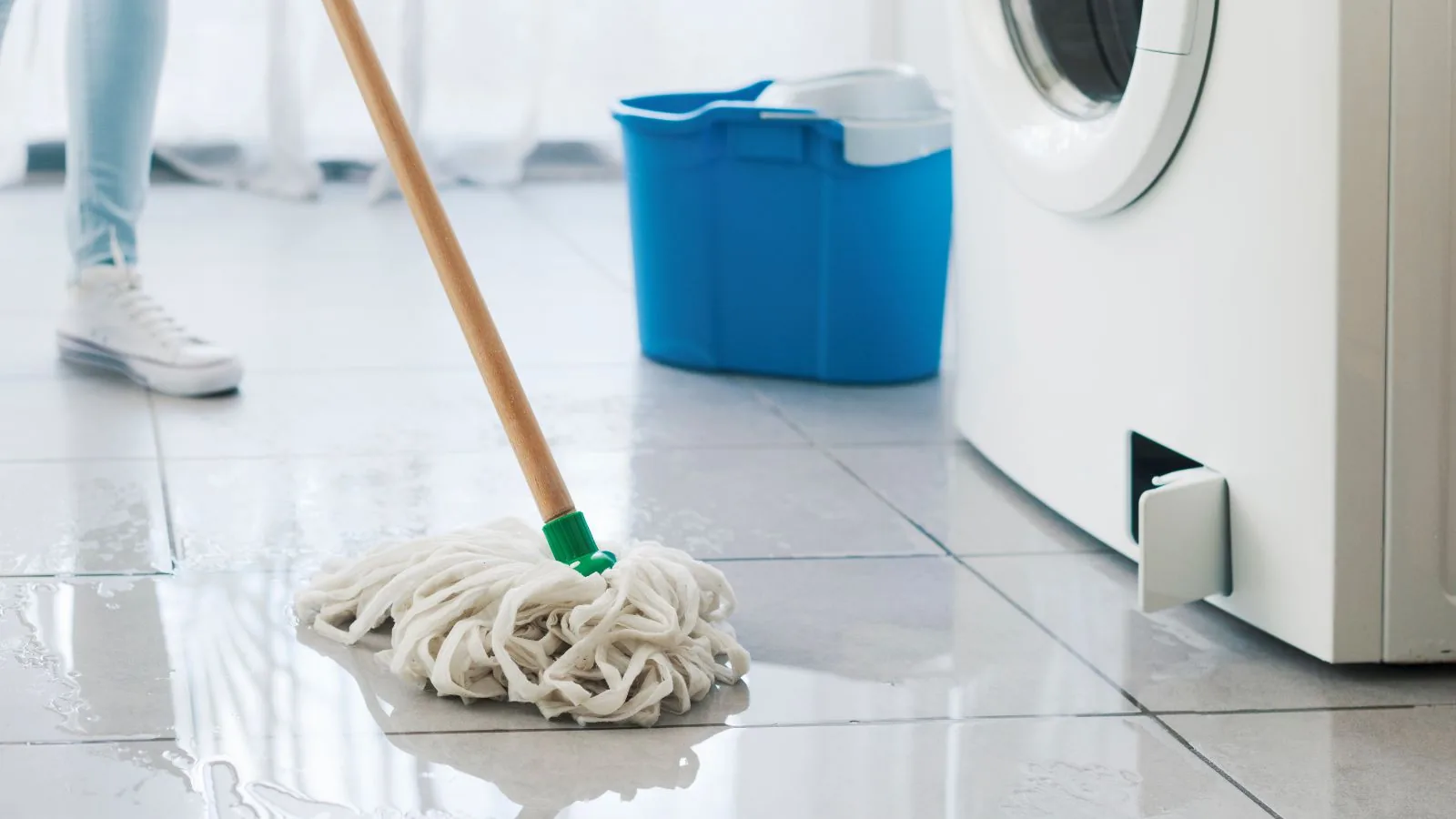
A leaking washer, dishwasher or refrigerator line can soak a floor in minutes, so act now. Our dispatch line for appliance leak water damage in Selden, NY runs 24/7, and while you wait you should close the water valve at the appliance and keep out of any wet area near outlets.
Appliance leak water damage is the wetting of floors, cabinets, walls and subfloor by water that escapes from a household machine's supply hose, drain hose, pump or tank. Drying starts with finding where the water went, not only where it came from.
Shut it off first: the valve for each appliance
Every appliance has a way to stop its water. A washer has two supply valves, hot and cold, usually on the wall behind the machine. A dishwasher or a refrigerator with an ice maker is fed through a small stop valve under the sink or behind the unit. A lever handle closes with a quarter turn, and a wheel handle needs several turns clockwise.
If a valve will not turn or keeps dripping, close the main shut-off where the supply enters the house. Suburban building in Selden took off in the early 1950s, so some houses still have original supply lines and old valves that seize. Do not force a stuck valve with a wrench, because a cracked valve body turns a leak into a flood. Go to the main instead.
When an appliance leak is an emergency
Treat it as urgent if water is still running, if it has reached a ceiling below, or if it is touching outlets, baseboard heaters or a breaker panel. It is also urgent if water has slipped under cabinets or flooring where you cannot see it. EPA guidance is to dry wet materials within 24 to 48 hours, so a leak found on Sunday night should not wait until Wednesday.
Same-day response is available when crews are free, including evenings and weekends. Call (934) 223-1875 and tell us which appliance failed, which floor is wet and whether the water is still running.
Signs the water went further than the puddle
- The floor feels soft, springy or cold underfoot near the appliance
- Baseboards swell or paint bubbles on the wall behind the unit
- A stain spreads on the ceiling under a second-floor laundry
- The water meter keeps moving after every fixture is off
A moisture meter and a thermal imaging camera find these hidden areas in minutes. We map readings across the room and mark the wet boundary before any equipment goes down.
Which appliance, which kind of water
| Appliance | Typical failure | Water category | What usually needs attention |
|---|---|---|---|
| Washing machine | Burst supply hose or overflowing drain hose | Category 1 from the supply, Category 2 from the drain | Flooring, subfloor and the ceiling below |
| Dishwasher | Door seal, inlet valve or drain line failure | Category 1 to 2, depending on the drain | Cabinet bases, toe kicks and flooring |
| Refrigerator | Cracked ice-maker line or clogged defrost drain | Category 1 | Flooring under and behind the unit |
How the drying is done
Crews start with water extraction to pull standing water, then remove a baseboard or a toe-kick panel so air can reach wet cavities. Air movers push dry air across surfaces while LGR dehumidifiers pull moisture out of the room. We recheck with a moisture meter on each visit until readings match an unaffected reference spot.
The process behind this is covered on our structural drying page. We also serve Mount Sinai, about 4 miles northeast of Selden.
Dry it, repair it or replace it
Not every wet material has to come out. Particleboard cabinet bases swell and rarely return to shape, so they are usually replaced, while solid wood bases can often be dried. Drywall that stayed wet briefly with clean water can usually be dried in place.
Flooring splits the same way. Hardwood floors may cup but can often be dried slowly, while laminate and vinyl plank swell at the seams and usually go. A house built before 1980 may have flooring layers that need testing before demolition.
We are not a plumbing or appliance repair company. Call a plumber to replace a failed valve or supply line, and an appliance technician to check the machine before you run it again.
What drives the cost
- The water category, since drain water needs more cleaning than a supply line
- How many square feet are wet, and how far the water traveled
- The materials involved, such as cabinets, hardwood, drywall or carpet pad
- Drying days and how many air movers and dehumidifiers the job needs
- Rebuild scope, which is separate from drying and happens only if you hire it
Call us and we will explain the scope and price before work starts.
Insurance, in general terms
Sudden and accidental damage, such as a hose that bursts overnight, is often covered under a homeowners policy. Gradual leaks and neglected maintenance often are not. Check your policy or ask your insurer before you decide. We document the loss with photos, moisture readings and a written scope to support your own claim.
Stay safe while you wait
Before the crew arrives
Stay out of standing water if the appliance or nearby outlets are plugged in. Cut power to the area at the breaker only if the panel is dry and you can reach it safely. If you smell gas or see sparks, leave the house and call 911 or the utility first. Lift rugs, boxes and shoes off the floor, and take photos before you move things.
Questions we hear in Selden
Do you handle appliance leak water damage emergencies at night or on weekends in Selden?
Yes. Dispatch runs around the clock, and same-day response is available when crews are free. We do not promise an arrival time, but we will tell you what to do with the water while a crew is assigned.
Should I unplug the appliance or leave it alone?
Unplug it only if the cord and outlet are dry and you can reach them without stepping in water. If not, leave the room and call us.
How long will the floor take to dry?
Many clean-water jobs take about three to five days of equipment time, but thick subfloor and trapped layers can run longer. Moisture readings decide when drying is finished.
Can a washer leak cause mold?
Mold needs moisture and something organic to feed on, and wet drywall, wood and carpet pad qualify. That is why the 24 to 48 hour drying window matters. If you already see growth, our mold remediation page explains the next steps.
A second-floor laundry leaked. Do I need to check the ceiling below?
Yes. Water follows framing and pipes into the ceiling cavity, and the stain may show up hours later. Press the ceiling gently and tell us about any sag, since a sagging ceiling is a stay-out situation.
Ready to talk it through?
Call (934) 223-1875