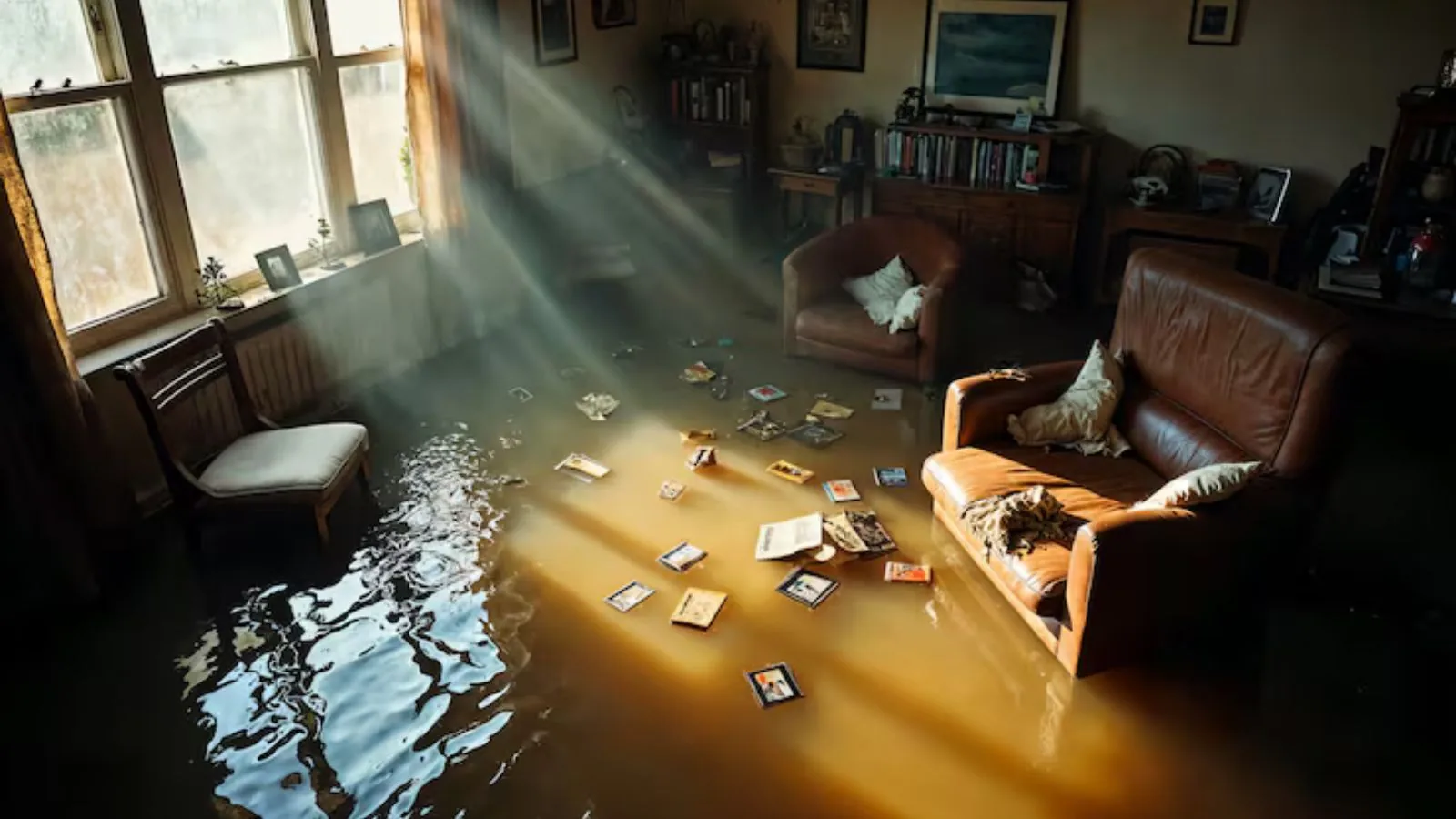
If floodwater is in your home, this is an emergency, and our dispatch line is open 24/7. Stay out of the water, keep children and pets away, and do not touch outlets, appliances or the breaker panel if any of it is wet.
Flood damage cleanup in Selden, NY means removing water that came from outside the plumbing, such as surface runoff or high groundwater, then discarding contaminated materials and drying the structure. Floodwater is usually Category 2 or 3, which is why it is handled differently from a pipe leak.
When floodwater is inside the house right now
Treat any water entering from outside as an emergency, especially if it covers floors, rises through a basement drain or reaches outlets. Do not walk through it to save belongings, and do not drive through flooded roads. If the water touches wiring, an oil tank or the furnace, call 911 or the utility before anything else.
Same-day response is available when crews are free, including nights and weekends. Call (934) 223-1875 and tell us how deep the water is, which rooms are wet and whether power is on. We will say what to do while a crew is assigned, and we do not promise an arrival time.
Why floodwater is handled as contaminated
Under ANSI/IICRC S500, water is sorted into Category 1 (clean), 2 (grey) and 3 (black). Rain or groundwater that crosses soil, lawns or a driveway picks up bacteria, fuel and debris, so it starts at Category 2 or 3 and does not become clean by sitting. That changes what we can dry and what must be thrown out.
| Material | After Category 2 or 3 water | Reason |
|---|---|---|
| Carpet and pad | Removed | They hold contaminants and cannot be fully cleaned |
| Drywall and insulation | Cut out to above the water line | They wick water and keep it |
| Solid wood and framing | Cleaned and dried | They can be sanitized and dried to normal readings |
| Concrete and tile | Cleaned and dried | They are not porous enough to hold it |
| Upholstery and mattresses | Usually discarded | Cleaning rarely reaches the filling |
Storm history and why the FEMA map matters
In August 2014, more than 13 inches of rain fell at Islip in about a day, and Suffolk County and the Town of Brookhaven declared a state of emergency. Superstorm Sandy reached Long Island in October 2012, and nor'easters and tropical systems still pass through. These events show that heavy rain can overwhelm drainage here, so look up your address on the FEMA Flood Map Service Center at msc.fema.gov.
Ask the Town of Brookhaven about local rules, since permit rules vary and the Division of Building decides. Our pages for Mount Sinai, near the harbor, and Middle Island, near the lakes and the Carmans River headwaters, describe how those low spots differ.
What the crew does
- Check for electrical, gas and structural hazards before anyone enters.
- Pump out standing water with extraction units, working from the deepest point.
- Remove wet carpet, pad, baseboards and low drywall and bag them.
- Clean and treat framing, concrete and hard surfaces.
- Dry the structure with air movers and LGR dehumidifiers, then recheck moisture readings.
- Document the loss with photos, readings and a written scope.
The drying stage follows the same rules as our structural drying process, with extra cleaning first.
When the water came up a drain
Water rising through a floor drain, toilet or cleanout is Category 3 and treated as sewage. Many Suffolk County homes are on septic systems or cesspools rather than sewers, so ask whether your home is on a sewer or a private septic system. See sewage backup cleanup for safety steps, and basement water damage cleanup for below-grade rooms.
What we do not do
Restoration is not waterproofing. We do not install sump pumps, grading, drains or foundation sealing, and we are not a plumbing, roofing or electrical company. After the dry-out, a waterproofing contractor can look at why water got in. An electrician should check any circuit that was wet.
Flood cleanup cost drivers
- Water category and the amount of contamination
- Square footage and depth of the affected area
- Materials removed, from carpet to drywall and insulation
- Drying days and how much equipment is needed
- Rebuild scope, which is separate from cleanup
Call us and we will explain scope and price before work starts.
Flood and insurance
Regular homeowners insurance usually excludes flood. Flood normally needs a separate policy, such as one under the National Flood Insurance Program. Check your policy and ask your insurer what applies. Photos, moisture readings and a written scope give you records to hand to your own insurer.
Safety checklist while you wait
- Do not wade through water that may touch wiring or the panel
- Cut power only if the panel is dry and you can reach it safely
- Leave and call 911 or the utility first for gas smell, sparks or buzzing
- Keep out of rooms with a sagging ceiling or bulging wall
- Photograph the water line before you move anything
Questions we hear in Selden
Do you handle flood damage cleanup emergencies at night or on weekends in Selden?
Yes. Dispatch runs 24/7 and same-day response is available when crews are free. We cannot promise an arrival time, but we will tell you what to do while a crew is assigned.
Is floodwater safe to clean up myself?
Not usually. It is often Category 2 or 3 and can carry bacteria and chemicals. Wear boots and gloves, keep it off skin, and ask a physician about any health concern.
How soon should drying start?
As soon as the water is out. EPA guidance is to dry wet materials within 24 to 48 hours, and floodwater makes that clock more urgent.
Will my homeowners policy pay for flood damage?
Often not. Flood is usually excluded and needs separate flood coverage. Read your policy and ask your insurer.
Can you stop water from coming back?
No. That is waterproofing or drainage work, and we do not do it. We clean and dry, and a waterproofing contractor handles prevention.
Is my home in a flood zone?
Check the FEMA Flood Map Service Center at msc.fema.gov for your address. For local rules, ask the Town of Brookhaven.
Ready to talk it through?
Call (934) 223-1875