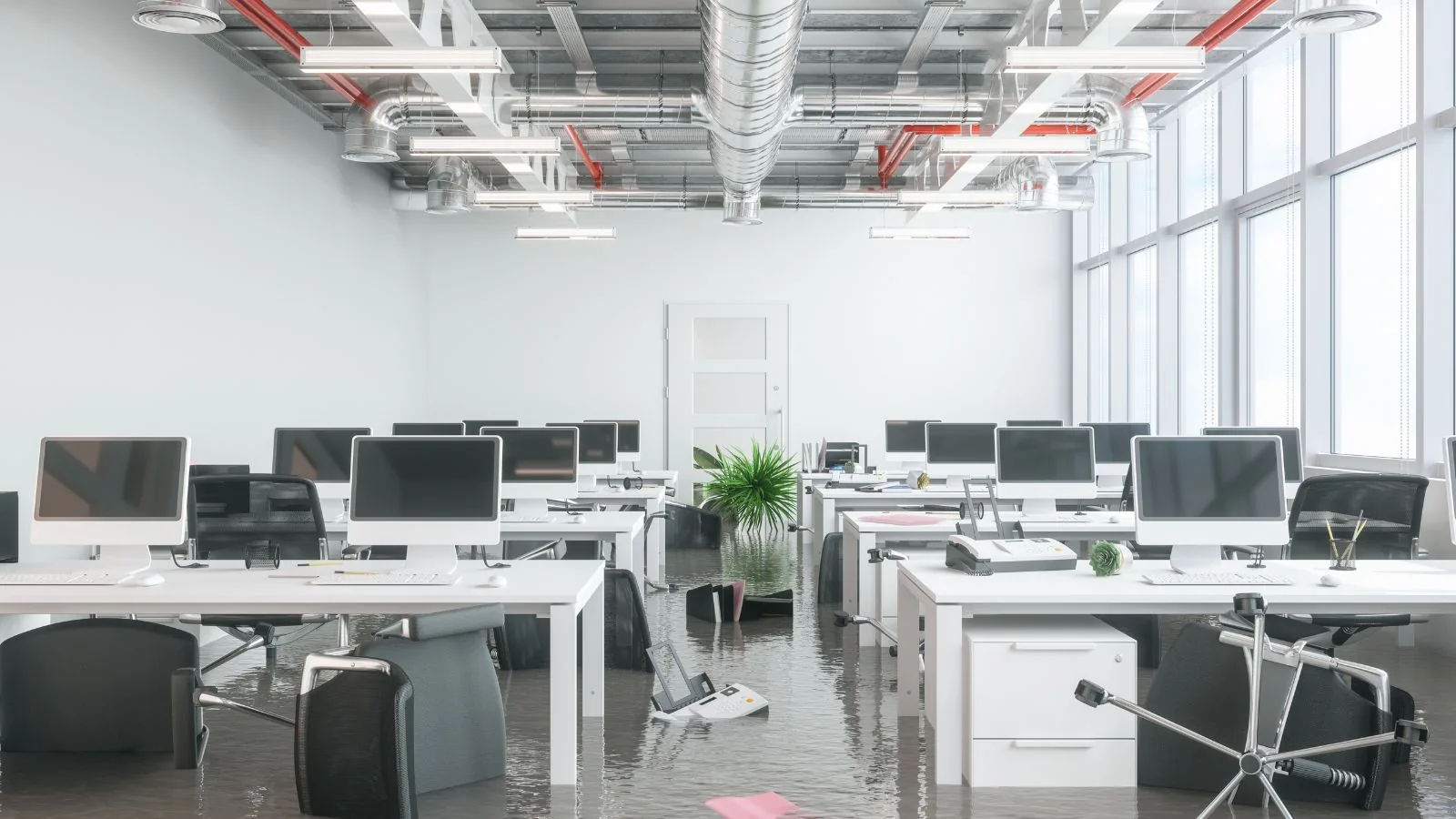
Water is coming through a ceiling, a supply line or a floor drain in your building, and every hour counts. Selden Water Damage Pros dispatches licensed and insured crews 24/7, with same-day response when a crew is free. While you wait, shut the water off at the main or the nearest isolation valve, lift stock and paperwork off the floor, and keep staff and customers out of any area with sagging ceiling tiles or water near outlets.
Commercial water damage restoration is the removal of water and the controlled drying of a shop, office, restaurant or multi-unit building so it can reopen with as little lost time as possible. Here is how that works in Selden, NY.
When water in your building is an emergency
Not every wet spot is a crisis. A damp ceiling tile under a condensation drip can wait for a morning phone call. These situations cannot:
- Water running from a ceiling or wall while the supply is still on
- Standing water near electrical panels, floor outlets or server racks
- A failed sprinkler line, boiler or rooftop unit
- Sewage or grey water backing up from a floor drain or restroom
- Ceiling tiles bowing under the weight of trapped water, which can mean a sag or collapse
In any of those cases, call right away, day or night. Same-day response is the aim whenever crews are free, and you get a plain read on timing when you call instead of a promised window. If sewage is involved, our sewage backup cleanup page explains the extra safety steps.
Why downtime shapes the whole job
A restaurant loses a service day, an office loses desks, and a retail floor loses sales. So the plan starts with one question: which rooms must reopen first? We map moisture with meters and a thermal imaging camera, then dry in zones so dry rooms stay usable while wet ones get air movers and LGR dehumidifiers. In a kitchen, ask your local health authority what you must show before reopening.
How the dry-out runs
- Stop the source and photograph the damage before anything moves.
- Pull standing water with pumps and extraction units, as described on our water extraction page.
- Remove what cannot dry in place, such as wet ceiling tile, insulation and baseboard.
- Set air movers and dehumidifiers, then record moisture readings every day.
- Release the space only when readings match dry reference points, then scope the rebuild.
The daily readings are the proof the job is done, and they add to the paper trail for your claim. It is the process we describe under structural drying, scaled up.
What usually dries in place and what usually comes out
| Material | Often dried in place | Often removed |
|---|---|---|
| Concrete slab | Yes, with dehumidifiers and air movement | Rarely, unless coatings or adhesives fail |
| Suspended ceiling grid | Metal grid usually stays | Stained or sagging tile |
| Drywall and insulation | Clean water caught early | Anything wet from sewage or wet for days |
| Glue-down carpet tile | Tiles lifted and dried when clean water | Tiles and pad from grey or black water |
| Paper files and stock | Some, if frozen or dried quickly | Items saturated by contaminated water |
What drives the cost of a commercial dry-out
- Water category, from clean supply water to sewage
- Square footage and number of units or floors affected
- Materials involved, such as slab, tile, drywall or finished millwork
- Drying days and how much equipment the space needs
- Rebuild scope, including ceilings, paint and flooring
Phased work around your business hours also changes the schedule. Call us and we will walk the space, explain the scope and the price before work starts, and put the plan in writing.
Insurance and the building owner
Commercial property policies often cover sudden and accidental water damage, while gradual leaks and neglect often are not covered. Flood usually needs separate flood coverage. Some policies add business income coverage, but check your policy or ask your insurer. If you rent, ask your landlord which policy covers the building and which covers your contents. We document damage with photos, moisture readings and a written scope to support your claim.
What we do and what we hand off
We are a water damage restoration company, not a plumbing, roofing or electrical contractor. Call a licensed plumber for the failed line, a roofer for the leak above, and an electrician before power returns to wet circuits. We can coordinate the dry-out around their visit, including jobs in nearby hamlets such as Middle Island along the NY 25 corridor.
Stay safe while you wait
Before the crew arrives
If you smell gas or see sparking, leave and call 911 or the utility first. Cut power only if the panel is dry and safe to reach.
Keep people out of rooms with sagging ceilings, standing water near outlets, or sewage. Do not walk through contaminated water, and do not run a wet-dry vacuum on standing water near electrical equipment.
Questions we hear in Selden
Do you handle commercial water damage emergencies at night or on weekends in Selden?
Yes. Dispatch runs 24/7, including nights, weekends and holidays, and we aim for same-day response when a crew is available. We do not promise an arrival time, but you will get a straight answer about timing when you call.
While you wait, stop the water if you can do so safely, lift stock off the floor and keep people out of affected rooms.
Can my business stay open during drying?
Often partly. We dry in zones, so rooms with no moisture can stay in use. Equipment noise and keeping customers out of wet areas are the usual limits.
What should I document for a commercial claim?
Photograph the source, the water and every affected room before anything moves. List damaged stock and equipment, and keep receipts for emergency steps. Our moisture readings and written scope add to that record, and your insurer decides what is covered.
The water came from the unit next door. What now?
Tell your landlord or property manager and the neighboring tenant at once, and photograph everything on your side. Responsibility often depends on your lease and the policies involved, so ask the building owner and your insurer. We can dry your space while that gets sorted.
How long does a commercial dry-out take?
Wet materials should be dried within 24 to 48 hours of the loss where possible. Full drying of a slab or wall cavities can take several days, and daily readings tell us when it is done. Larger or contaminated losses take longer.
Ready to talk it through?
Call (934) 223-1875