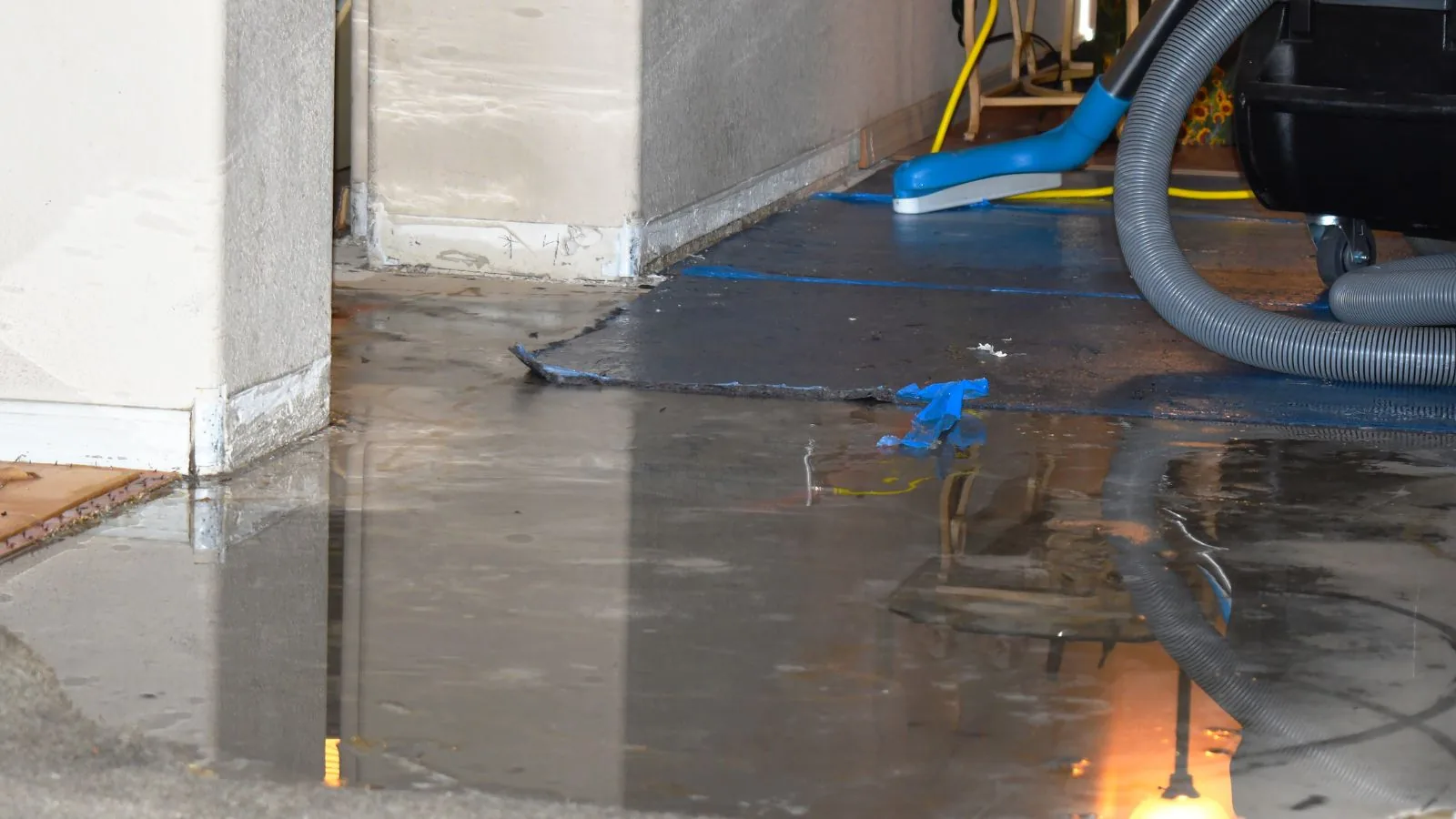
Water on the floor is a clock, not just a mess. Our dispatch line runs 24/7, so call (934) 223-1875 now, and while a crew is arranged, stop the source if you can and keep everyone out of the wet rooms.
Water extraction in Selden, NY means removing standing water from floors, carpet and low spaces with submersible pumps, extraction units and wet vacuums. It is the first stage of drying, and it works best in the first hours, before the water soaks into drywall, padding and subfloor.
When standing water is an emergency
Standing water is an emergency when it is deeper than a puddle, when it is still coming in, or when it has reached outlets, appliances or insulation. A thin film across a 400 square foot room still holds a surprising amount of water, and it wicks into baseboards and carpet padding within hours. We handle same-day calls when crews are available, including evenings and weekends.
Before anyone arrives, close the valve or fixture feeding the water. If you cannot find the source, shut the main valve where the line enters the house, and move to dry ground.
How the water actually comes out
Crews match the tool to the water. Submersible pumps clear anything deeper than an inch or two, portable and truck-mounted extraction units pull water out of carpet and padding, and wet vacuums finish edges and stairs. On hard floors, squeegees and a weighted extraction wand lift the thin layer a pump cannot reach.
Extraction removes the bulk of the water, but it does not dry the building. Moisture meters and a thermal imaging camera show what is still wet inside walls and under flooring, and that reading decides whether the job moves on to air movers and LGR dehumidifiers. That second stage is explained on our structural drying page.
Reading the water before the pumps start
| Category | Typical source | What usually happens |
|---|---|---|
| 1, clean | Supply line, tub overflow, ice maker line | Carpet and drywall often dried in place if treated within 24 to 48 hours |
| 2, grey | Washing machine drain, dishwasher discharge, sump overflow | Padding removed, carpet cleaned and dried or replaced |
| 3, black | Sewage, rising ground water, storm runoff | Porous materials removed, area cleaned and disinfected |
Clean water that sits for a day or two can slide into the next category as bacteria multiply, which is one more reason not to wait. If the water came up through a floor drain or toilet, stay out and read about sewage backup cleanup.
Heavy rain and what it leaves behind
In August 2014 more than 13 inches of rain fell at Islip in about a day, according to National Weather Service reporting, and Suffolk County and the Town of Brookhaven declared a state of emergency. Water that enters from the yard or the ground is treated as Category 2 or 3, so after a storm like that, crews assume contamination and wear protective gear. For rising water across a property, see flood damage cleanup.
Ask whether your home is on a sewer or a private septic system, because an overflowing cesspool changes what is in the water. A flooded lower level is its own job, covered under basement water damage.
Dry it in place or tear it out
Carpet
Clean-water carpet can often be extracted and dried in place. The padding is cheap to replace and slow to dry, so it commonly goes.
Hardwood
Boards that are wet but still flat may be dried with mats and heat. Cupping or lifting means more drying time and sometimes replacement.
Drywall
Wet drywall that stayed clean can be dried. If it is soft, crumbling or soaked by contaminated water, it is cut out.
Insulation
Wet batts hold water against framing, so they are usually removed to let the wall cavity dry.
What changes the cost of extraction
- Water category, since contaminated water adds protective steps and disposal.
- Depth and the square footage the water reached.
- Materials involved, such as carpet, hardwood, tile or plaster.
- How many days of air movers and dehumidifiers the structure needs.
- Rebuild scope after drying, if drywall or flooring has to be replaced.
Every house is different, so call the 24/7 line and we explain the scope and price before work starts.
Insurance in plain terms
Sudden and accidental water damage, such as a failed supply line, is often covered by homeowners policies. Slow leaks and neglect often are not, and flood usually needs separate flood coverage. We document the loss with photos, moisture readings and a written scope to support your own claim, and your insurer makes the coverage decision, so check your policy.
Stay safe while you wait
Water and electricity do not mix
If water is near outlets or the panel, do not wade in. Cut power only if the panel is dry and safe to reach, and call 911 or the utility first if you smell gas or see sparks.
- Stop the source or close the main valve.
- Photograph the water line on walls and furniture before anything moves.
- Lift small valuables and electronics off the floor.
- Keep children and pets out, especially if the water might be Category 3.
- Do not run a household vacuum on standing water.
Questions we hear in Selden
Do you handle water extraction emergencies at night or on weekends in Selden?
Yes. Dispatch runs around the clock, and we aim for same-day response when crews are available, including after hours. We cannot promise an arrival time, but we will tell you what to do while you wait.
How long does extraction take?
Pumping a few inches out of one room can take a few hours, while a whole floor takes longer. Drying the structure afterward usually takes several days, and meter readings, not the calendar, decide when it is done.
Can I just use a wet vacuum myself?
For a small clean-water spill on a hard floor, a wet vacuum is reasonable. Once water has reached carpet padding, baseboards or a wall, moisture meters are needed to find what you cannot see.
Do you fix the leak that caused it?
No. We are a restoration company, not a plumbing, roofing or electrical contractor. Call a licensed plumber for a broken pipe and a roofer for a roof leak, and we handle the water and drying.
Is water extraction the same as waterproofing?
No. Extraction removes water that is already inside, while waterproofing stops future seepage and belongs to a different trade.
Will my carpet be saved?
It depends on the water category and how long it sat. Clean water caught early often leaves the carpet salvageable, and sewage water does not.
Ready to talk it through?
Call (934) 223-1875