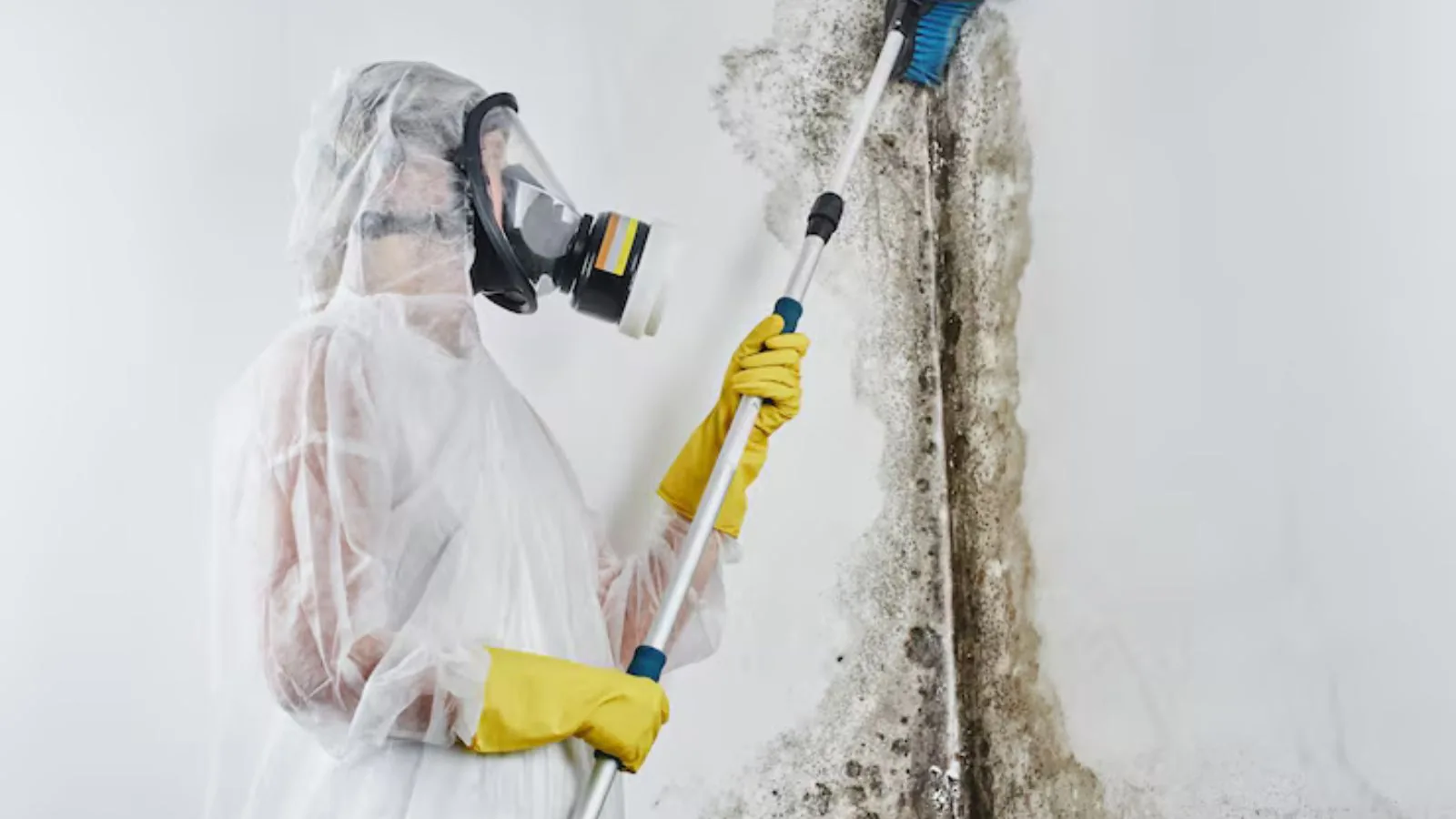
Mold remediation is the controlled removal of mold-contaminated material and the cleaning and drying of the surfaces around it, done so spores are not spread through the rest of the building. Selden Water Damage Pros dispatches licensed and insured crews for mold remediation in Selden, NY, and can work to ANSI/IICRC S520 practice.
If you are here after a leak, the order of work matters: stop the water, dry the area, then deal with the growth. This page explains each step, who tests, who removes, and what to ask for.
There is a musty smell or dark spotting on my wall or ceiling after a leak. Is that mold?
It can be. A musty odor or dark, fuzzy or speckled patches that show up after a leak usually mean building materials stayed damp long enough for mold to take hold, but only a licensed assessor can tell you what a spot is. Once mold is confirmed, the trade that handles it is mold remediation, which means containing the area, removing contaminated material and drying what remains.
Do not scrub, bleach or paint over it before someone looks. Disturbing growth can spread spores into clean rooms, and paint hides moisture that is still there.
Mold follows the water, so the leak comes first
Mold needs moisture and an organic material to feed on, such as paper-faced drywall, wood framing, ceiling tile, insulation or carpet backing. EPA guidance is to dry wet materials within 24 to 48 hours, because growth becomes more likely after that window. Removing mold without fixing the water source is like mopping while the tap runs.
These are typical sources of the moisture behind a mold problem, and the trade that fixes each one:
- A toilet or sink supply that dripped into a wall or the ceiling below, which needs a licensed plumber
- An air conditioner condensate line that backed up, covered on our AC leak water damage page
- A roof or flashing leak, which needs a roofer, with the stained ceiling handled under ceiling water damage repair
- Siding or window leaks that wet wall cavities
- Seepage in a below-grade room, covered under basement water damage cleanup
We are not a plumbing, roofing or waterproofing company. Call the right trade to stop the source, and we will dry and remediate what the water reached.
Inspection, testing and independent clearance
Testing and removal are two different licensed jobs, and they are kept apart on purpose. A mold assessor inspects, may take air or surface samples, and writes a protocol that defines what should be removed. A remediator carries out that protocol. We are on the remediation side, and we do not test our own work.
New York State's Mold Program, run by the Department of Labor under Labor Law Article 32, requires state licenses for both mold assessors and mold remediators. New York does not let one individual both assess and remediate the same property. An independent assessment is used to define the scope of remediation, and a post-remediation assessment is a minimum work standard. Ask to see the license of anyone who comes to your door.
| Role | What they do | Independence rule |
|---|---|---|
| Mold assessor | Inspects, samples, writes the remediation protocol | Cannot also remediate the same property |
| Mold remediator | Contains, removes, cleans and dries per the protocol | Cannot also assess the same property |
| Assessor, after the work | Inspects and tests to clear the area | Independent of the crew that did the work |
| Water restoration crew | Dries structure and contents after the leak | Works before and alongside the others |
Sampling results are one piece of information. A visual inspection, moisture readings and the building's history of leaks matter as much as a lab number.
Clearance testing for a home sale or a loan
When a house is being sold or financed, a lender, buyer or agent may ask for proof that a mold problem was dealt with. The usual document is a written post-remediation assessment from an independent licensed assessor, rather than a statement from the company that did the removal. Ask your lender or agent what they accept, since requirements vary and we cannot speak for any lender.
Plan the timeline with that in mind. Dry the area, complete the remediation, let the assessor inspect, then pass the written results to whoever asked. A result that does not clear means further cleaning, then a recheck.
How containment and removal work
- Fix and verify that the water source is stopped, and take moisture readings.
- Seal the work area with polyethylene sheeting and containment barriers, with a zipper door for entry.
- Run HEPA air scrubbers so the area stays under negative pressure and air leaves through a filter.
- Remove porous materials that cannot be cleaned, such as wet drywall, insulation and carpet pad, and bag them in the work area.
- HEPA-vacuum and damp-wipe framing and solid surfaces, then sand or clean wood where the protocol says to.
- Dry the structure with air movers and LGR dehumidifiers until readings return to normal, as explained under structural drying.
Only after drying and cleaning does the independent assessor return to inspect. Rebuilding with new drywall, paint and trim comes after clearance, never before it.
What is cleaned and what is thrown away
| Material | Typical decision | Reason |
|---|---|---|
| Wood framing and joists | Usually cleaned and dried | Solid and can be HEPA-vacuumed or sanded |
| Drywall and ceiling tile | Usually removed | Paper face feeds growth and cannot be cleaned inside |
| Insulation | Usually removed | Holds moisture and traps contamination |
| Carpet and pad | Pad removed, carpet case by case | Pad is porous and hard to clean |
| Concrete | Cleaned and dried | Hard surface, but moisture must be controlled |
Replacing is not always the cheaper path, but it is often the cleaner one. We tell you which materials we expect to remove before work starts.
Selden homes, storms and the 24 to 48 hour window
In August 2014, more than 13 inches of rain fell at Islip in about a day, and a Suffolk County and Town of Brookhaven state of emergency followed. Long Island also gets nor'easters and tropical systems. If a storm sent water into a basement or under-floor space and it stayed wet past two days, our crawl space and basement pages explain the drying side, and mold is a reasonable thing to have checked.
Suburban development in Selden took off in the early 1950s, so a house from that era through the 1970s may still have original materials. A pre-1980 house may have materials that need testing before demolition, so ask about that before wall or ceiling sections are removed. Whether a permit applies depends on the work, so the Town of Brookhaven Division of Building is the one to ask.
What drives the cost of mold remediation
- How much material is affected and how far it has spread
- Which materials must be removed, such as drywall, insulation, flooring and framing
- Containment setup and the number of days of air scrubbers and negative air
- Drying time and equipment, if the structure is still wet
- Rebuild scope after clearance, including drywall, paint and trim
The independent assessment is a separate cost from remediation. Call us and we will explain the scope and price before work starts.
Insurance and mold
Mold coverage varies by policy. Many policies cover mold that results from sudden and accidental water damage, often with limits, and gradual leaks and neglect often are not covered. Flood usually needs separate flood coverage. Check your policy or ask your insurer, and document the damage with photos, moisture readings and a written scope. We provide those records to support your own claim, including for homes in Middle Island.
Stay safe and out of the way
Before the work begins
Keep people and pets out of the affected room, close the door, and turn off fans or HVAC vents that blow across it. Do not sweep, sand or vacuum the growth with a household machine.
No one on this page is giving medical advice. If anyone in the home is concerned about their health, ask a physician. Cut power only if the panel is dry and safe to reach, and call 911 or the utility first for any gas or electrical danger.
Questions we hear in Selden
Why does my room smell musty after a leak, and is it mold?
A musty smell after a leak often points to damp materials, and mold is one possible cause. Only an inspection and moisture readings by a licensed assessor can confirm it. Meanwhile, keep the area closed off and find the water source.
Do you do the mold testing too?
No. Testing and remediation are separate licensed jobs in New York, and the same individual cannot do both on the same property. A licensed assessor tests, and we handle the removal side. We can work with whichever licensed assessor you choose.
Will mold come back after remediation?
No honest company can promise it will not. Mold returns when moisture returns. Fixing the leak, drying the structure and keeping humidity in check are what reduce the chance.
Can I clean small mold with bleach?
Bleach can discolor surfaces without addressing the moisture or the porous material underneath. For anything beyond a small area on a hard surface, have it inspected. Avoid disturbing growth on drywall or ceiling tile.
I am selling my house and the buyer's lender wants mold cleared. What now?
Ask the lender or agent exactly what document they need. Typically that is a written assessment from an independent licensed assessor after the work is done. We cannot promise any lender's decision, but we can complete the remediation to a written scope.
Does mold remediation start the same day?
Same-day response is possible when crews are available, but a licensed assessor's protocol often comes first when mold is confirmed. We confirm the next step when you call.
Ready to talk it through?
Call (934) 223-1875