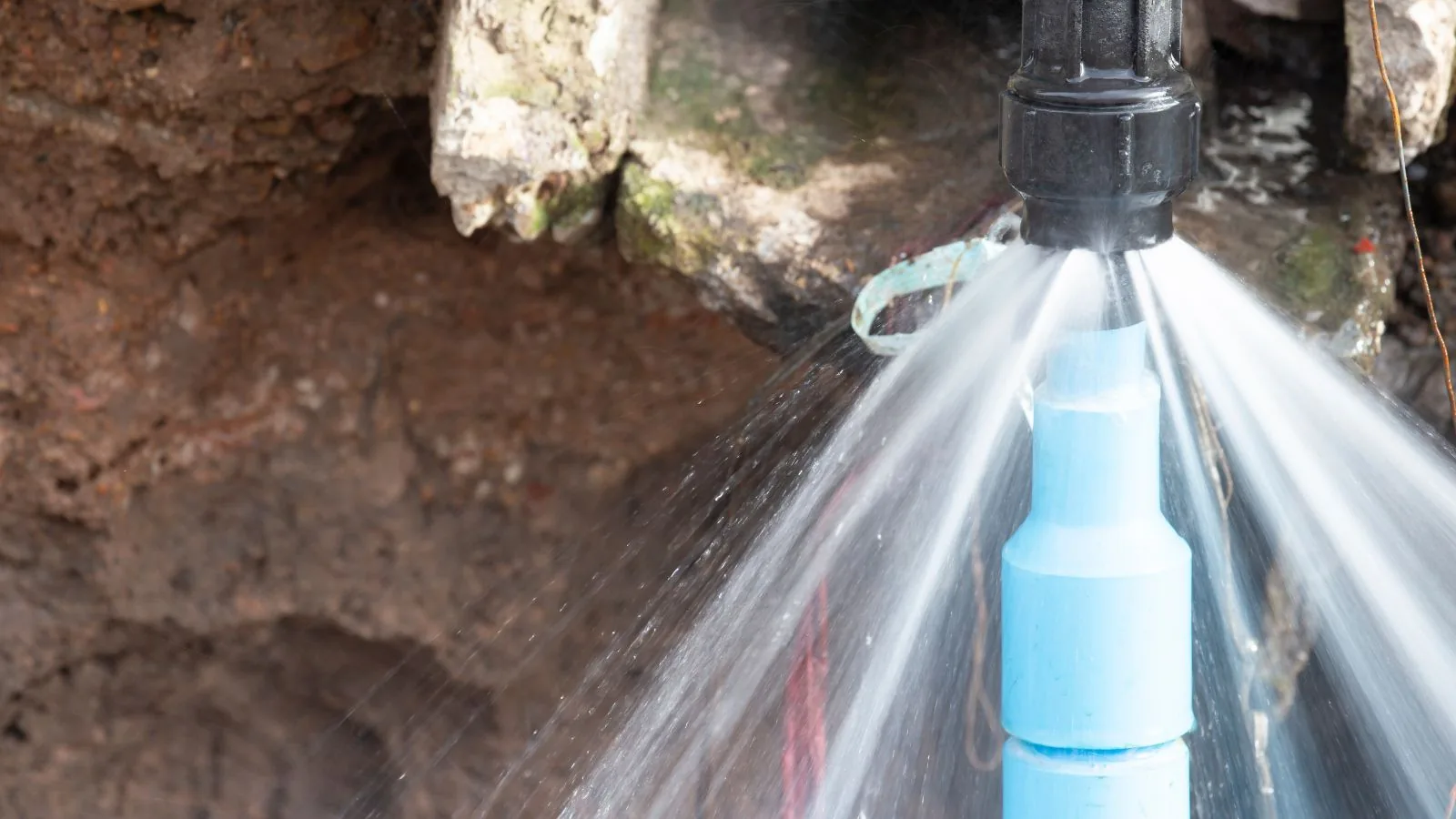
A burst pipe can release dozens of gallons a minute, so the water supply comes before anything else. Close the main valve, then call our 24/7 line at (934) 223-1875 and stay out of any room where water is near outlets.
Burst pipe water damage in Selden, NY is the wetting of floors, walls, ceilings and contents after a pressurized supply line splits or a fitting lets go. The damage is Category 1 at the start, and it gets worse the longer it sits.
Shut the water off first
- Find the main shut-off valve, usually where the line enters near the water meter or heater.
- Turn it clockwise until it stops. A lever valve closes with a quarter turn.
- Open the lowest faucet in the house to drain what is left in the pipes.
- If the valve will not close, call the water supplier.
Check your water bill to confirm your supplier. The Suffolk County Water Authority serves public water across the county, and its customer service number is (631) 698-9500. If the break is on the street side of your meter, the SCWA main break map on its website shows reported breaks.
What makes a supply line fail
Pipes burst for a handful of reasons. Ice expansion is the best known, and the mechanics are covered on our frozen pipe page. The others are corrosion from the inside, a pressure spike, a worn compression fitting, or a plastic supply hose that has hardened with age.
Suburban building in Selden took off in the early 1950s and ran for decades. Houses from that era may still carry original galvanized or older copper supply lines, so after any failure it is sensible to have a licensed plumber look at the remaining runs, not only the one that split.
Signs a pipe has gone behind the wall
- The sound of running water when every fixture is off.
- A water meter dial that moves with nothing in use.
- Paint bubbling, drywall that feels soft, or a brown stain growing on a ceiling.
- A sudden drop in water pressure.
- A musty smell near an interior wall, even without visible water.
If you see any of these and the main is still open, close it before you investigate. A slow weep inside a wall can soak a few feet of insulation and drywall in an afternoon.
How the damage is mapped
Crews start with a pin-type and pinless moisture meter on walls and floors, then scan with a thermal imaging camera. Wet material shows as a cooler patch because water evaporating takes heat with it. That map shows how far the water traveled, which is often much farther than the visible stain.
Standing water is removed first with pumps and extraction units, as described on our water extraction page. Air movers and LGR dehumidifiers then run until the readings match a dry reference. Drying a wall cavity is covered in more detail under structural drying.
Where the pipe broke decides the work
| Break location | What gets wet | Typical work |
|---|---|---|
| Under a kitchen or bath sink | Cabinet base, flooring, adjacent wall | Extraction, cabinet toe-kick removal, floor and wall drying |
| Inside an interior wall | Drywall, insulation, studs, baseboard | Flood cut, insulation removal, cavity drying |
| In the ceiling or attic | Ceiling below, insulation, lights | Controlled ceiling opening, drying, patch |
| Basement joists or slab edge | Subfloor above, finished walls | Extraction, partial demolition, dehumidification |
Repair, replace or dry in place
Drywall that was only wetted by clean supply water can often be dried and kept, especially when it has not yet softened. Once it sags, crumbles or has lasted past 48 hours without drying, it is cheaper and cleaner to cut it out. A flood cut is a straight horizontal cut about 12 to 24 inches above the water line, and it lets the cavity breathe.
Solid wood trim and framing nearly always dry fine. Fiberglass insulation and wet carpet padding rarely do. Details on that wall work are on our wall and drywall page.
Who fixes the pipe
We are not a plumbing company. A licensed plumber replaces the failed section and tests the line, and we handle the water, drying and documentation. Do not let the plumber close the wall until we have taken moisture readings if you can help it, since the open cavity makes drying faster. Permit rules vary, so ask the Town of Brookhaven Division of Building if the repair is large.
What drives the price
- Water category, which for a fresh supply line starts clean.
- The area affected, including how many rooms and floors.
- Materials: plaster, drywall, hardwood and tile behave differently.
- Days of drying equipment on site.
- Rebuild scope once the structure is dry.
Call (934) 223-1875 and we explain the scope and price before work starts. The same dispatch covers neighbors such as Mount Sinai, about 4 miles northeast.
If you plan to file a claim
A pipe that splits suddenly is the kind of sudden and accidental loss that homeowners policies often cover. Gradual leaks and damage from neglect often are not, so ask your insurer how your policy treats the cause. We photograph the damage, record moisture readings and write a scope to support your claim.
Stay safe while you wait
Before the crew arrives
Do not touch outlets, cords or the panel with wet hands or wet floors. Cut power only if the panel is dry and safe to reach, and call 911 or the utility first if you smell gas or see a wire down. Lift valuables off the floor and keep children out of the wet rooms.
Questions we hear in Selden
Do you handle burst pipe emergencies at night or on weekends in Selden?
Yes. Dispatch is open 24/7, and we offer same-day response when crews are available, including nights. We do not promise an arrival time, but we will walk you through the shut-off and safety steps by phone.
Should I turn the electricity off?
Only if the panel is dry and you can reach it safely. If water is near the panel or you are unsure, leave it and call 911 or the utility.
How long until the walls are dry?
Most wet wall cavities need several days of air movers and dehumidifiers. We take readings daily and stop equipment only when materials match a dry reference.
Do I need a plumber before you start?
The water must be shut off, which you can do at the main. A plumber can repair the pipe before or during drying, and you do not have to wait for them to begin extraction.
Will my floors survive?
Tile and sealed vinyl often do. Hardwood and laminate depend on how fast the water was removed and how long the floor stayed wet.
Can I use a fan and open windows instead?
It helps surface moisture, but it will not dry a wall cavity or subfloor. Without meters you cannot know what is still wet.
Ready to talk it through?
Call (934) 223-1875