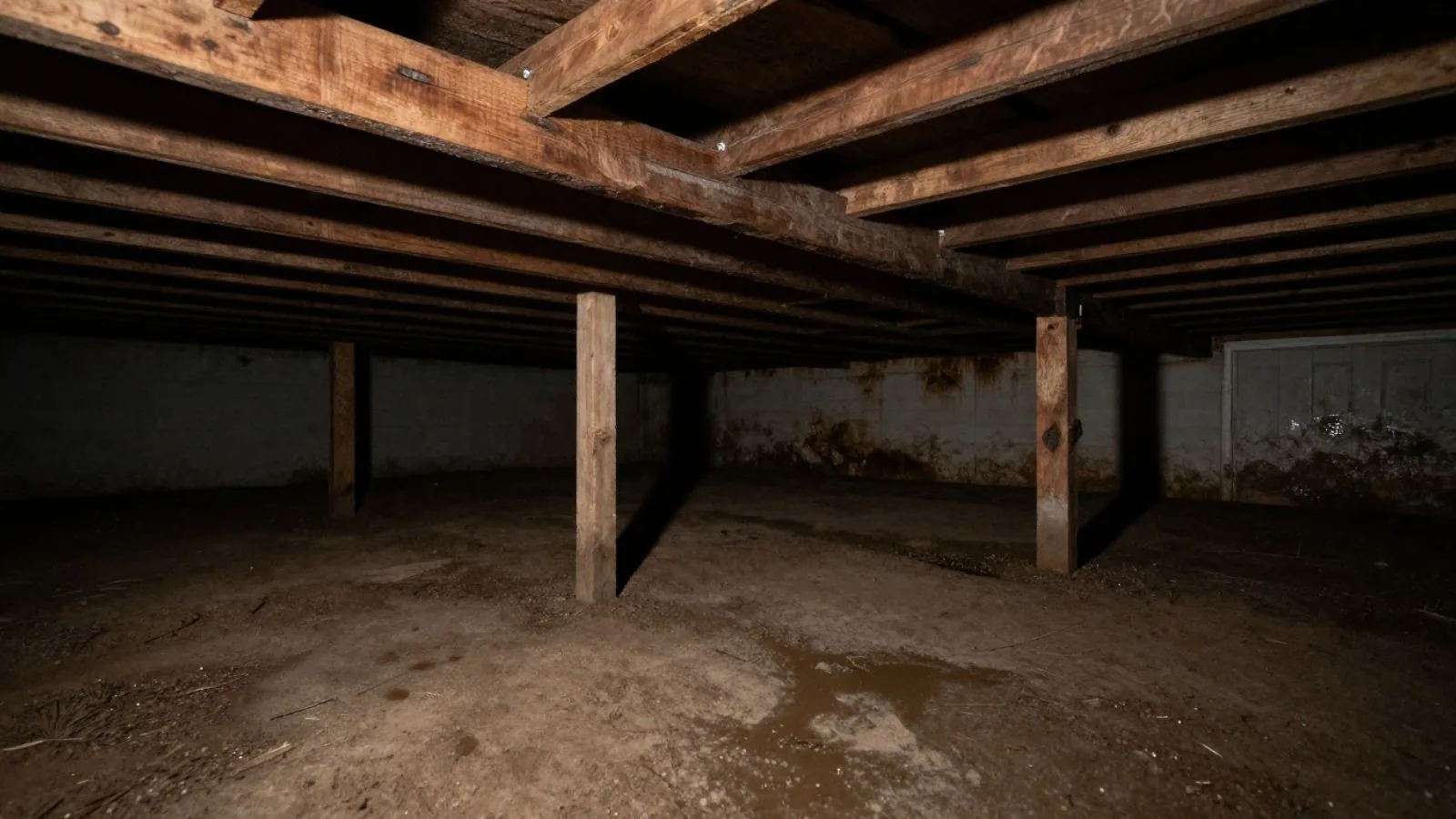
Crawl space water damage in Selden, NY is moisture in the shallow void between the ground and your first floor, whether it came from a leaking pipe, groundwater, or humid air condensing on cool surfaces. Because nobody looks down there often, the problem is usually found by smell, a soft floor or a high humidity reading.
If you suspect water under the house, call (934) 223-1875 and a crew can arrange an inspection. Do not go in alone.
Signs the space under your floor is wet
- A musty smell that rises through floor vents or when the access hatch is opened.
- Floors that feel spongy, bounce, or have boards cupping upstairs.
- Insulation hanging down from the joists, sagging or dark with moisture.
- Visible water, a wet vapor barrier or a tide line on the foundation wall.
- Rusted ducts, nails or fasteners, and condensation beads on pipes.
One sign alone is not a diagnosis. Two or three together mean it is time for moisture readings, because wood that stays wet gives mold what it needs.
How a crawl space gets wet
Every wet crawl space comes down to one of three paths. Liquid water arrives from a leaking pipe, a failed appliance line above, or groundwater pushing in after heavy rain. Water vapor rises from bare soil and condenses on cool joists and ducts.
Which path you have decides the fix, so we do not guess. A plumbing leak is repaired by a plumber, and a groundwater problem may need a waterproofing contractor. Our job is the drying and restoration of what the water reached.
Long Island gets nor'easters and tropical systems, and Superstorm Sandy hit in October 2012. If your home has a crawl space, check the FEMA flood map for your address at msc.fema.gov, because a mapped flood zone tells you whether to ask about separate flood coverage.
What each part of the crawl space can and cannot recover
| Component | What water does | Usual decision |
|---|---|---|
| Fiberglass insulation | Soaks, sags and holds moisture against the subfloor | Removed and replaced |
| Vapor barrier | Pools water, tears or shifts | Dried and re-laid if intact, otherwise replaced |
| Joists and subfloor | Absorb water and can swell or soften | Dried when sound, cut out when soft |
| Ductwork and wiring | Rust, sag and short circuit risk | Inspected, with HVAC or electrical trades for repairs |
| Stored boxes and fabric | Wick water and hold odor | Usually discarded |
We are not a plumbing or electrical company. If the table points to a duct or wire, we tell you which trade to call.
Entering a crawl space safely
Do not crawl in alone
Crawl spaces are tight, dark and can hold standing water near wiring. Stay out if you see water touching cables, smell gas or sewage, or notice a sagging floor above, and call 911 or the utility first for gas or electrical danger.
Cut power to the area only if the panel is dry and safe to reach. Otherwise leave it alone and call us.
Drying a space you cannot stand in
A crew works in coveralls and respirators, often lying down. Water is pumped out with small extraction units, then wet insulation and debris are bagged and carried out.
Air movers and compact LGR dehumidifiers dry the joists and subfloor, with moisture meters used on the wood each day. The same method used for walls applies, and it is explained on our structural drying page. When the water started upstairs, water extraction may be needed in the rooms above as well.
Drying a crawl space is slow because the air is still and the ground keeps giving off moisture. That is why we recheck readings instead of removing equipment on a set day.
Odor, mold and what comes after drying
Mold needs moisture and organic material, and joists and cardboard supply plenty of both. If growth is found, the water source must be corrected first, and a licensed professional handles removal under New York mold program rules. See mold remediation for how containment, HEPA air scrubbers and independent testing work.
After the wood reads dry, insulation and vapor barrier are restored. Whether to add ground cover or a dehumidifier is a decision to make with your contractor. Permit rules vary, so ask the Town of Brookhaven Division of Building.
What changes the cost of crawl space work
- Water category, from a clean supply leak to groundwater or a drain line.
- Size of the space and how much of it is wet.
- Access: a tight hatch means more labor to move equipment and debris.
- Drying days, including the equipment sized to that volume.
- Rebuild scope: insulation, vapor barrier, and any subfloor or joist repair.
We explain the scope and price before work starts, so call (934) 223-1875 for a visit. For insurance, sudden and accidental damage is often covered, gradual seepage often is not, and flood usually needs separate coverage. We document with photos, moisture readings and a written scope to support your claim.
Where we work near Selden
Crews also serve Mount Sinai, a harbor-side hamlet about 4 miles northeast of Selden. Waterfront homes there are a reason to check the flood map before you decide on repairs.
Questions we hear in Selden
Can I dry a crawl space with a household dehumidifier?
A small unit helps with humidity, but it will not dry saturated joists or insulation. Standing water and wet wood need extraction, air movers and a dehumidifier sized to the space.
Is a musty smell under the floor always mold?
No. Damp soil, wet insulation and old stored items all smell musty. Moisture readings tell you whether something is still wet, and testing is a separate step if growth is suspected.
Does wet insulation need to be replaced?
Fiberglass that has soaked and sagged generally cannot be dried in place, and it holds moisture against the subfloor. It is removed and replaced after the wood has dried.
Who fixes the cause of the water?
A licensed plumber fixes leaking lines, and a waterproofing contractor handles groundwater and drainage. We dry and restore after the cause is stopped, and we will say plainly if a visit shows another trade is needed.
Do you inspect before giving a scope?
Yes. A crew checks the space with moisture meters and, where useful, a thermal imaging camera. You get a written scope and price explained before work starts.
How fast can someone come out?
We work toward a same-day response when a crew is available, but we do not promise arrival times. Call during the day or after hours and the dispatcher explains what is possible.
Ready to talk it through?
Call (934) 223-1875