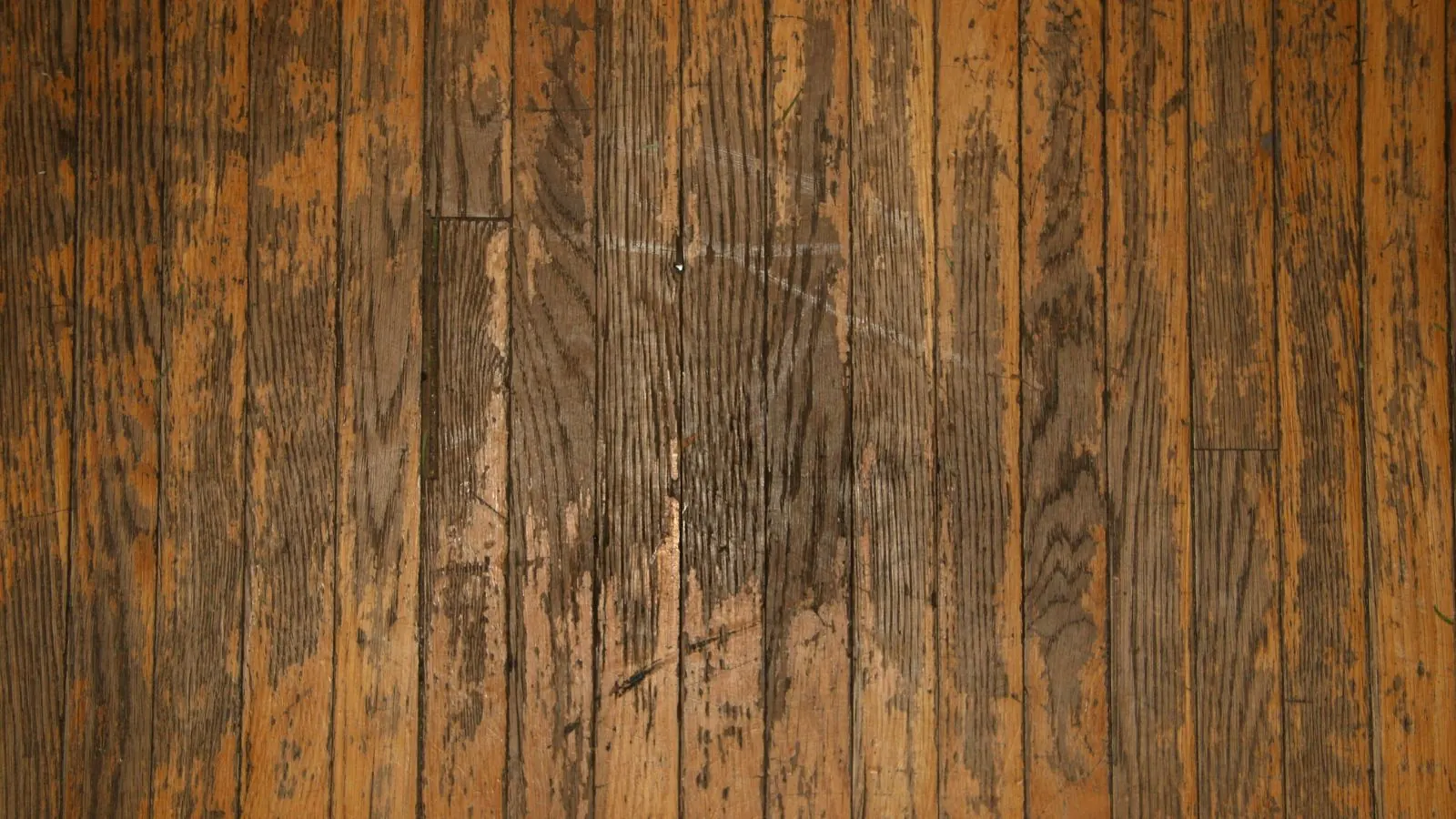
Hardwood floor water damage is what happens when solid or engineered wood absorbs moisture from a leak, spill or damp subfloor and starts to swell, cup or stain. In Selden, NY, we dispatch licensed and insured crews around the clock to dry the floor before the boards lock into a new shape.
If boards are still wet, lift rugs and furniture legs off the surface and keep fans pointed across the room, not at one board. Then call us for a moisture reading and a plain answer about what the floor can survive.
What the boards are telling you
Cupping
Board edges rise above the center, making a washboard ripple. It usually means moisture reached the underside or the floor sat over a damp space.
Crowning
The center of each board is higher than the edges. It often shows up after a cupped floor is sanded too early.
Gapping and lifting
Boards shrink apart as they dry, or they buckle off the subfloor when swelling has nowhere to go.
Dark stains and odor
Black or gray marks and a musty smell point to water that sat for days. Check for mold and see our note on mold remediation.
Cupping and drying: what happens inside the wood
Wood is a bundle of tiny tubes that pull in water. When the underside of a board gets wetter than the top, the bottom swells faster and the edges curl up. That is cupping, and it is why a floor can look fine for a day and then warp.
Drying has to be slow and measured. We take pin and pinless moisture meter readings across the floor and the subfloor, set drying mats or panel systems that draw moisture up through the boards, and run LGR dehumidifiers to hold the air dry. Hard fast heat can split boards, so patience matters here.
Many cupped floors relax once they reach a stable moisture level, and that can take days to weeks. We do not sand or refinish until readings settle, because sanding a floor that is still cupped can leave it crowned. The wider process is explained on our structural drying page.
Can this floor be saved?
| What happened | Outlook | Usual next step |
|---|---|---|
| Clean water, caught within 24 to 48 hours | Good chance to dry in place | Mat drying, then wait for readings to settle |
| Cupping with no standing water | Often recovers as moisture evens out | Monitor, then sand and refinish if flat |
| Water trapped under a sealed finish | Slower drying, higher risk of staining | Open edges, dry from below, recheck weekly |
| Buckled or lifted boards | Often replaced in sections | Remove damaged boards, dry subfloor, patch |
| Grey or black water | Usually removed | Replace boards and treat the subfloor |
Engineered planks are layered, so they often fail by delaminating at the edges. Laminate is not hardwood and rarely recovers once it swells.
Older houses and what to ask before sanding
Suburban development in Selden took off in the early 1950s, so a house from that era through the 1970s can still carry original finishes, adhesives and underlayment. A pre-1980 house may have materials that need testing before demolition or sanding. Before anyone grinds old finish or pulls old glue, ask whether those materials have been tested. Permit rules for floor and subfloor work vary, so ask the Town of Brookhaven Division of Building.
Refinish, patch or replace
Refinishing makes sense when the floor is flat, dry and stable, and the stain is only in the finish. Patching works when damage is limited to a few boards and matching stock exists. Replacement is the honest answer when boards have buckled, the subfloor is soft, or the wood sat in contaminated water.
Color matching is the usual trade-off. A patch in an old floor may stay visible until the whole room is refinished, so the choice is partly about how much of the room you want to treat at once.
Where the water came from changes the plan
A dishwasher or sink leak usually hits the kitchen floor first, which is covered on our kitchen water damage page. A floor over a concrete slab can wick moisture from below, and a hidden supply line there is a slab leak question. We are not plumbers, so a licensed plumber must stop the source. After that, we dry the floor, whether the house is in Selden or a neighboring hamlet such as Mount Sinai.
What drives the cost of hardwood repair
- Water category and how long the wood stayed wet
- Square footage of affected flooring and whether it runs through several rooms
- Species, thickness and whether the floor is solid or engineered
- Drying days, mats and dehumidifier time
- Rebuild scope, such as patching, sanding, staining and finish coats
We walk the floor, explain the scope and the price before work starts, and tell you honestly which boards we expect to save.
A note on insurance
Sudden and accidental damage, like a burst supply line, is often covered. Slow leaks and neglect often are not. Check your policy or ask your insurer. We document the floor with photos, moisture readings and a written scope to support your own claim.
Do this while you wait
- Stop the water source, and cut power only if the panel is dry and safe to reach
- Mop up standing water and lift rugs, furniture and wet cardboard off the floor
- Do not use a heat gun, space heater or floor sander on wet boards
- Leave vents and fans moving air across the room
- Photograph the floor from several angles before anything moves
Questions we hear in Selden
Will my cupped hardwood floor go flat again?
Often it does, once the moisture level inside the boards evens out. That can take days or weeks, and we measure it rather than guess. If boards have buckled or the finish has failed, replacement of some boards may be needed.
How soon should I call after a leak on a wood floor?
As soon as you see water on it. EPA guidance is to dry wet materials within 24 to 48 hours, and wood that dries sooner is less likely to stain or lock into a bad shape.
Can I just run fans and a dehumidifier myself?
You can start, and it helps. But a fan on one board can dry the top faster than the bottom and make cupping worse. Moisture readings and mat systems control the rate more safely.
Should I sand the floor as soon as it looks dry?
No. Wait until moisture readings are stable on the boards and the subfloor. Sanding a floor that is still drying can leave it crowned or reopen gaps.
Do you replace the boards, or only dry them?
We do both when needed. Drying comes first, and if boards have to come out, we scope the replacement and refinishing in writing before work begins.
Ready to talk it through?
Call (934) 223-1875