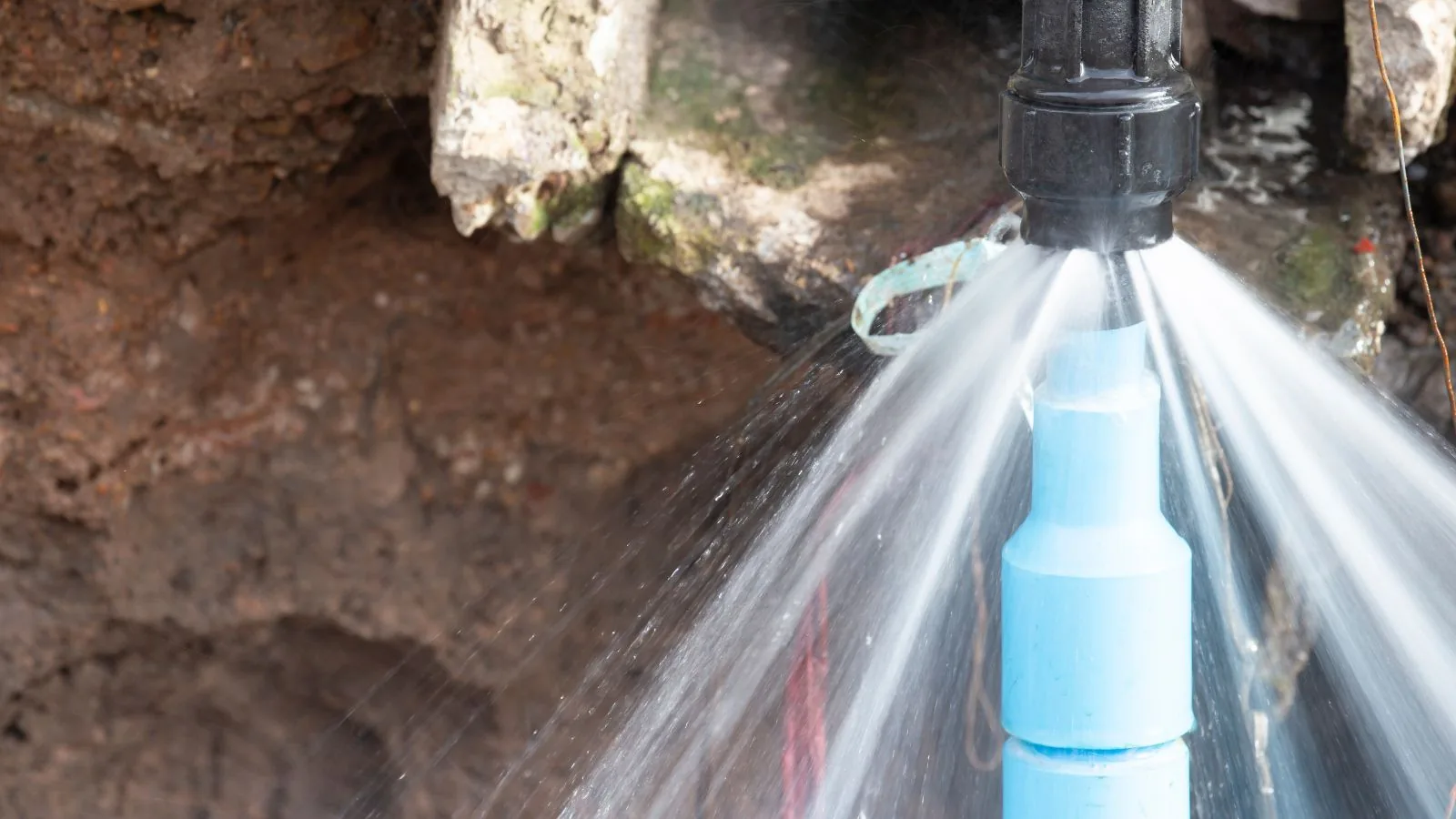
Homeowners insurance often covers water damage that is sudden and accidental, such as a supply line that bursts or a water heater tank that fails. It usually does not cover damage from a slow leak, poor upkeep or rising floodwater. The exact answer lives in your own policy, so treat this page as general background for Selden, NY homeowners and not as a promise about any claim.
Most people ask this with a wet floor in front of them. If that is you, stop the water at its source first, then come back to read. A covered cause and a denied cause can look identical on the carpet, and the difference comes down to how the water arrived and how long it sat.
What a standard policy tends to cover
A typical homeowners policy has a dwelling section that pays to repair the structure and a personal property section that pays for belongings. Water from a sudden event often touches both. Picture a washing machine hose that splits at 2 a.m., a frozen pipe that cracks and floods a hallway, or a dishwasher line that lets go behind the cabinet.
- A pipe that bursts or a fitting that fails without warning
- Overflow from a tub, sink or appliance that worked normally until the moment it did not
- Rain that enters after a covered event damages the roof, such as wind stripping shingles
- Reasonable steps to stop more damage, like removing standing water, which many policies expect you to take
Each item describes something that happened at a point in time, not something that built up over months. Insurers read policies that way, and so should you.
Exclusions that catch people off guard
Exclusions are where claims stall. Gradual seepage, repeated leakage over weeks, rot and long-running condensation are often written out of the policy. So is damage that follows neglect, such as a known drip left unrepaired for a season.
- The failed part itself, since the cost to replace a broken pipe or tank is often separate from the water damage it caused
- Mold, which some policies cap or exclude unless it follows a covered loss
- Flood and surface water, covered in the next sections
- Sewer or drain backup, unless an endorsement was added
- Seepage through foundation walls or floors from the ground
Wording varies from policy to policy. Read the water damage section and the exclusions list side by side, and if you see a phrase like continuous or repeated seepage, ask your insurer how it defines the time period.
Talk to dispatch about your situation.
Call (934) 223-1875Sudden versus gradual: where the line gets drawn
An adjuster reviewing a loss looks for signs of duration. Layered stain rings, corroded fittings, a soft subfloor and established mold growth tend to read as gradual. A clean break, a dated photo and a wet-only, not rotted, structure tend to read as sudden.
| Situation | How it is often treated | What to check in your policy |
|---|---|---|
| Supply hose splits overnight | Sudden and accidental, often covered | The water damage definition and your deductible |
| Drip under a sink for months | Gradual, often excluded | Language on continuous or repeated seepage |
| Frozen pipe splits in a cold snap | Often covered if the home was heated | Any clause about vacant or unheated homes |
| Roof leak after wind removes shingles | Often covered when the storm is the cause | Wind terms and any limits tied to roof age |
| Basement seepage after heavy rain | Often treated as ground or surface water | Flood and water backup endorsements |
Flood is its own category
Policies draw a hard line between water from a broken system inside the house and water that arrives from outside. Rising water from a river, a storm surge or heavy rain running across the ground counts as flood, and regular homeowners insurance usually excludes it. Flood protection normally comes from a separate policy, such as one written through the National Flood Insurance Program.
Flood policies often carry a waiting period before they take effect, so buying one when a storm is already forecast may not help. Ask whoever sells the policy for the exact period. If rising water did reach your home, the flood damage cleanup page explains how Category 2 and 3 water is handled.
Sewer and drain backup, the quiet gap
Water that comes up through a floor drain or toilet is neither a burst pipe nor a flood, which is why it so often falls between coverages. Many policies leave it out unless a water backup endorsement was added.
Backup water is Category 3, so it needs protective gear and containment whatever your coverage says. The steps are laid out on our sewage backup cleanup page.
A note for renters
Renters deal with two policies. The landlord's policy covers the building, and your renters policy covers your belongings and often extra living costs if the unit becomes unlivable. If your overflowing tub damages the apartment below, the personal liability part of a renters policy is usually the piece that responds.
- Tell your landlord in writing the same day, with photos attached
- Photograph your own belongings before moving or discarding anything
- Ask who arranges drying, because the building's policy does not replace your sofa
Where restoration fits next to a claim
Insurance decides who pays. Restoration decides how quickly the building dries. We dispatch licensed and insured crews around the clock, and when you call (934) 223-1875 we can start water extraction and drying while you phone your insurer. Our crews record photos, moisture readings and a written scope that you can hand to your insurer. Before any work begins, the scope and the price are explained to you.
We do not decide coverage, and nothing here is a promise of payment. For a pipe that has just let go, the burst pipe water damage page walks through the shut-off steps first.
Coverage questions worth asking as a Selden homeowner
Suburban building in Selden took off in the early 1950s, so many houses still have original cast iron or galvanized plumbing behind the walls. Old pipe tends to weep slowly before it fails, which is the kind of leak insurers often call gradual. Look at visible supply lines and the area around the water heater once a year, and fix small drips early.
Heavy rain is a real Long Island event. More than 13 inches fell at Islip in about a day in August 2014, and a state of emergency followed in Suffolk County and the Town of Brookhaven. Water that comes in at ground level in a storm like that is usually treated as flood or surface water, so check the FEMA Flood Map Service Center at msc.fema.gov for your address and ask your insurer what your policy says.
Many Suffolk County homes use a septic system or cesspool instead of a sewer. Ask whether your home is on sewer or septic, because backup endorsements can be worded around that. Neighbors in Mount Sinai near the harbor and in Middle Island near the lakes should ask the same flood question for their own addresses.
Questions we hear in Selden
Do I need flood insurance in Selden, NY?
It depends on your address, your lender and your risk. Look up your property on the FEMA Flood Map Service Center at msc.fema.gov and ask the Town of Brookhaven or your insurer about local conditions.
If your mortgage lender requires flood coverage, they will tell you. If not, the choice is yours, and it is worth making before a storm rather than during one.
Is a slow leak under the sink covered?
Often it is not, because many policies exclude leakage that happens over a long time. The sudden event that follows, such as a cabinet floor collapsing, may be treated differently.
Your policy wording decides. Photograph the damage and ask your insurer how they classify it.
Does insurance pay for mold after a leak?
Sometimes, and often with a cap. Coverage for mold frequently depends on whether the water that caused it was a covered event.
Will my policy pay to replace the pipe that broke?
Many policies pay for the resulting water damage but not for the failed pipe or appliance itself. Others handle it differently, so read the section on the cause of loss.
Should I start drying before the insurer visits?
Most policies expect you to protect the property from further damage, and wet drywall and padding get worse each day. Photograph everything first, keep notes, and call your insurer the same day.
EPA guidance is to dry wet materials within 24 to 48 hours, which is why waiting for a visit can cost more than it saves.
Ready to talk it through?
Call (934) 223-1875