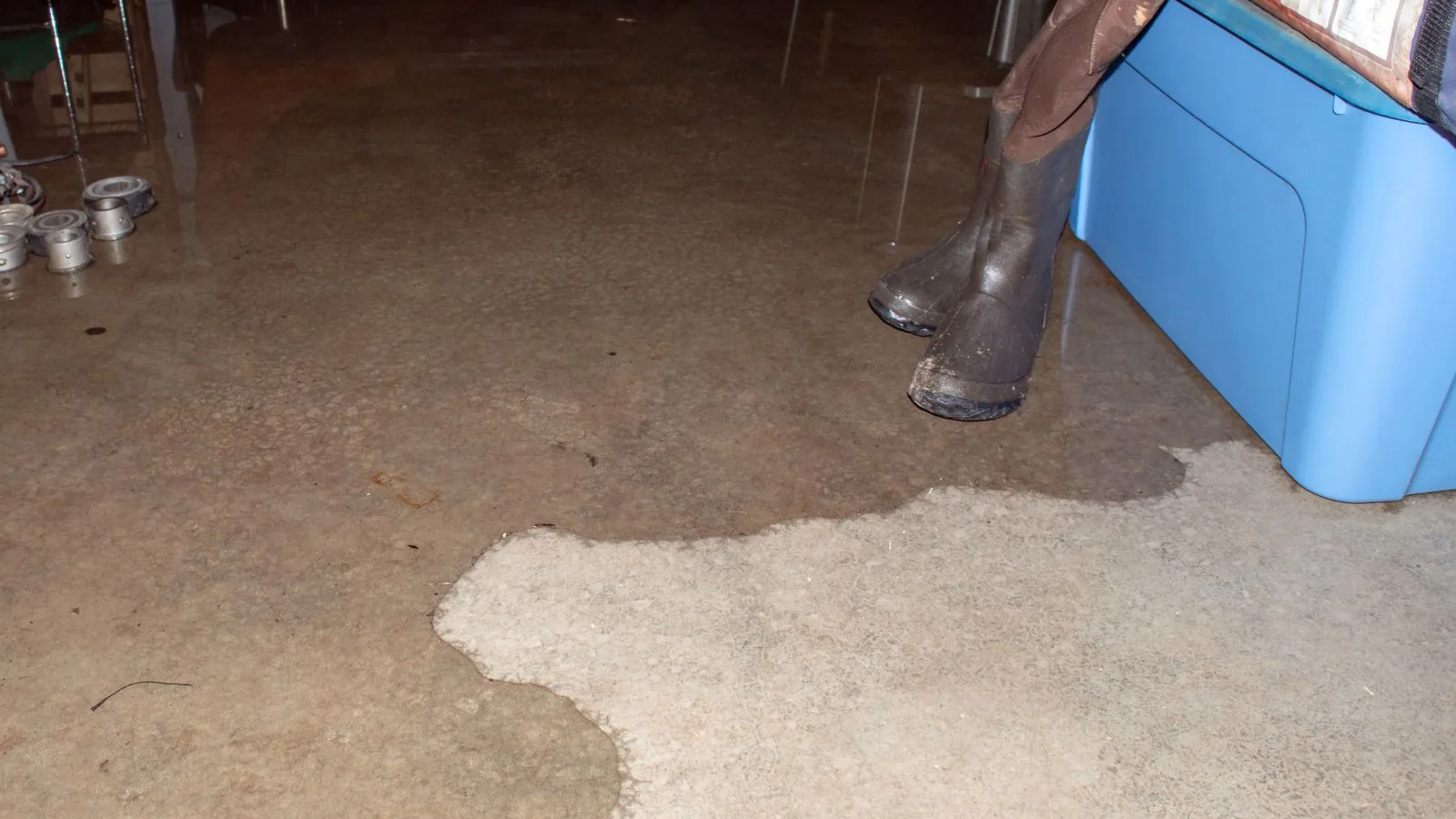
A small patch of mold on a hard, non-porous basement surface such as sealed concrete, tile or metal can often be wiped off with detergent and water. Anything more than that, or anything that comes back, points to a moisture problem that scrubbing will not solve. The honest answer to getting rid of basement mold in Selden, NY is to find the water first and the growth second.
Below you will find what is reasonable to do yourself, the signs that mean stop, how New York licensing splits the work between two different professionals, and who to call for each type of cause.
Find out why the basement is damp
Mold grows where moisture lingers, so a basement that is cleaned but still damp will grow it again. Before you pick up a brush, spend an evening working out where the water comes from. A dry paper towel taped to a wall for a day, or a cheap humidity meter on a shelf, tells you more than a smell does.
| What you notice | Likely source | Who fixes it |
|---|---|---|
| Dark patches on the ceiling under a bathroom or kitchen | Leaking drain, supply line or toilet seal above | A plumber, then drying |
| Wet bottom of walls after heavy rain | Water entering through the foundation or poor drainage | A waterproofing or drainage contractor |
| Damp air, sweating pipes, musty smell all summer | Humid air meeting cool surfaces | A dehumidifier, sometimes an HVAC technician |
| Pooled water or a failed sump pump | Pump or discharge failure | A plumber or pump installer, then water cleanup |
| Sewage smell or dirty water from a floor drain | Drain or septic backup | Stay out and call a plumber first |
Notice how many of those answers are other trades. We are a restoration company, not a waterproofing, plumbing or foundation contractor. If the cause is outside the house, the fix belongs to a contractor who does that work, and our job starts after the water is stopped.
What a homeowner can reasonably do
Surface growth on a hard material is the one case where cleaning at home is a common choice. Porous materials are different, because growth goes below the surface and cannot be wiped away. Use this list to decide if you are in the first group.
- The area is small, on sealed concrete, tile, glass, metal or hard plastic.
- The surface is dry or can be dried completely within a day.
- You can wear an N95 respirator, goggles and rubber gloves.
- You can ventilate with a window or exhaust fan and keep the area closed off from the rest of the house.
- You will use detergent and water, never mixing cleaning products, especially bleach with ammonia.
- Nothing you plan to clean is a wet carpet, drywall, insulation or cardboard.
Bag the rags and wipes before carrying them upstairs, and run a dehumidifier afterward. Aim to keep basement humidity steady and moderate, since a dehumidifier that cycles all day usually means a source of moisture is still active.
Talk to dispatch about your situation.
Call (934) 223-1875When to stop and call someone
Some conditions are beyond a weekend project. Stop and call if any of these apply.
- Growth is on drywall, carpet, insulation, ceiling tile, or framing lumber.
- The patch keeps returning after you cleaned it.
- Mold covers a large share of a wall or ceiling, or you can smell it without seeing it.
- The cause was sewage, a backed-up drain or any dirty water.
- You need to cut into a wall or ceiling to find where it is coming from.
- Anyone in the house is worried about their health, which is a question for a physician.
Disturbing a large area can also spread spores into rooms upstairs, so do not sand, scrape or run a leaf blower or fan across heavy growth. If you are unsure, photograph the area and talk to a professional before touching it.
How New York splits assessment from removal
Under Labor Law Article 32, the New York State Mold Program requires state licences for mold assessors and for mold remediators. The same individual may not do both on one property. The reason is simple: the person who decides what needs removing should have no stake in selling the removal.
In practice, an independent assessor inspects the basement and writes the scope of work. A licensed remediator then carries that scope out, and a post-remediation assessment is used as a minimum standard to confirm the work. Ask to see each licence before agreeing to anything. If a company offers to test, quote and clean the same basement, that is the pattern the rule exists to prevent.
What professional basement mold work involves
When a basement does need a crew, mold remediation follows a set order. Plastic containment barriers seal off the work area, HEPA air scrubbers clean the air, and materials that cannot be cleaned, such as wet drywall or insulation, are bagged and removed. Surfaces that can be saved are cleaned, then dried before anyone rebuilds.
If water is still present from a pipe failure or a pump that quit, that part of the job is basement water damage cleanup, and it comes before mold work. Crews work to ANSI/IICRC S520 for mold, and you may ask any company whether it does. We explain the scope and price before work starts, and we document moisture readings and photos to support your own insurance claim.
Drying matters more than cleaning
After water gets in, EPA guidance is to dry wet materials within 24 to 48 hours. A basement slab and block walls hold water longer than wood framing does, so equipment is often the only way to hit that window. Air movers and LGR dehumidifiers, with moisture meters tracking progress, are the tools involved in structural drying.
Insurance often covers sudden and accidental water damage and often does not cover gradual seepage or neglect. Flood usually needs separate flood coverage. Check your policy or ask your insurer before assuming either way.
What this means for Selden basements
Selden grew mostly from the early 1950s on, with development continuing through the 1970s. Houses from that period may have finished basement rooms with original drywall, paneling and paint, and a pre-1980 house may have materials that need testing before they are demolished. That is a good reason to ask before cutting out a wall yourself.
Check your water bill to confirm whether your supplier is the Suffolk County Water Authority, and ask whether your home sits on a sewer or a private septic system. If a basement drain backs up and your home has a septic system, the water is contaminated and the cleanup is a different job. For rebuilding, whether a permit applies depends on the work, so the Town of Brookhaven Division of Building is the one to ask.
Neighbors who need help include homes in Mount Sinai, where harbor-edge properties should check the FEMA flood map for their address, and Middle Island, where lake and river-headwater areas are worth asking about before finishing a lower level.
Questions we hear in Selden
Can I just paint over basement mold?
Paint does not remove growth or fix the moisture beneath it. The stain can reappear through the coating, and trapped moisture may make it worse. Clean or remove the material first, dry it, and only then consider finishing.
Does a dehumidifier get rid of basement mold?
A dehumidifier lowers the moisture that growth depends on, but it does not remove growth that is already there. It is a good follow-up to cleaning and drying, not a replacement for either.
Should I test the mold before I clean it?
For a small hard-surface patch, most homeowners simply clean it. For larger or recurring problems, a licensed independent assessor can set the scope. The assessor and the remediator must be different individuals under New York law.
Is a Selden basement more likely to flood than another area?
We cannot say that. Look up your address on the FEMA flood map and ask the Town of Brookhaven about local drainage. Past rain events, including August 2014 in Islip, are a reminder to know your own property.
Who do I call if the basement leaks every time it rains?
That points to drainage or foundation work, which is a waterproofing or drainage contractor. We can handle drying and cleanup once water has entered, but we do not do waterproofing.
Ready to talk it through?
Call (934) 223-1875