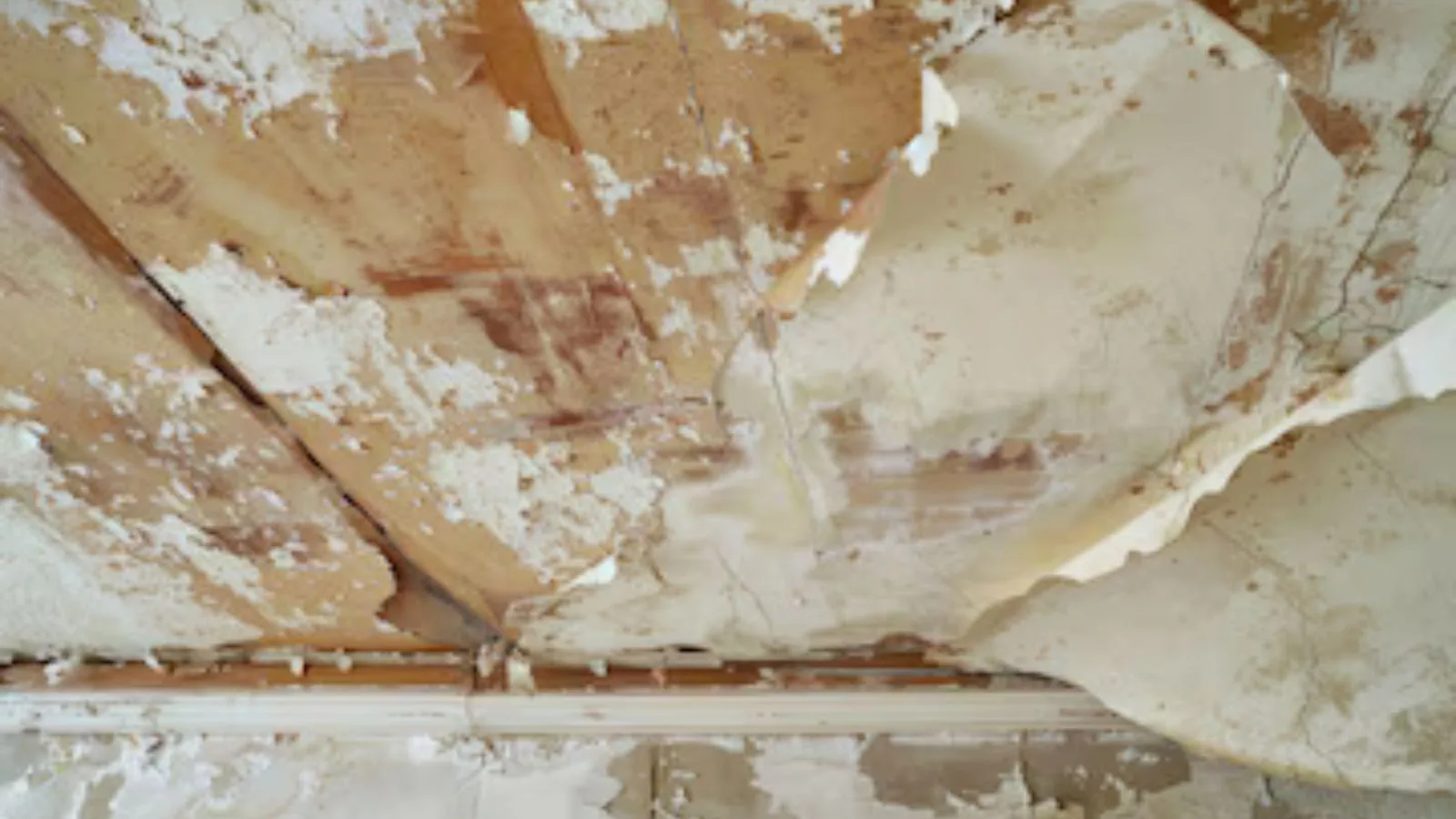
EPA guidance on water-damaged buildings is to dry wet materials within 24 to 48 hours. That is the window most restoration crews work from, because it is when moisture can still be removed before mold has a chance to establish itself. After that, growth becomes possible rather than certain, and it depends on conditions in the room.
No honest source can give you an exact hour for your house. What can be explained is the usual order, the conditions that make it faster or slower, and what to do in Selden, NY when you find a leak and do not know how long it has been going on.
A general timeline after a leak
The table below describes a typical sequence for a wet drywall wall or carpeted room that is not being dried. Real houses vary, so treat the stages as a rough order, not a stopwatch.
| Time since the leak | What is usually going on | What to do |
|---|---|---|
| First day | Water has soaked drywall, pad, wood and insulation. Surfaces may feel wet or cool. | Stop the source, remove standing water, start drying. |
| 24 to 48 hours | The EPA drying window is closing. Moisture is still inside materials even if surfaces look dry. | Get air movers and dehumidifiers running and take meter readings. |
| Past 48 hours | Damp organic surfaces can start to support growth, often hidden behind baseboards or under carpet. | Check behind finishes with a meter and thermal imaging camera. |
| Several days | A musty smell or small spots may appear in corners, closets and ceiling edges. | Photograph the area and ask for an assessment. |
| A week or more | Visible patches can spread across porous materials that stayed wet. | Expect removal of affected materials, not just cleaning. |
There is no health claim in this table. It only describes where moisture and materials stand. Questions about how mold affects any person belong with a physician.
What speeds growth up
Mold needs moisture and an organic surface. Anything that keeps either one around for longer shortens the time to visible growth.
- Materials that are porous and organic, such as drywall paper, ceiling tile, carpet pad, cardboard and untreated wood.
- Still air with no ventilation, like a closed closet or a wall cavity.
- Warm indoor temperatures combined with high humidity, especially in summer.
- Water that keeps coming, from a slow drip or a supply line that was never fixed.
- Wet contents left against walls, such as furniture, boxes or a mattress.
A mattress, a sofa or stored boxes on a wet floor can keep a wall damp even after the floor itself is dried. Moving them off the wet area early is one of the cheapest steps you can take.
Talk to dispatch about your situation.
Call (934) 223-1875What slows growth down
Drying works by taking away the one ingredient you can control. The faster that happens, the less time anything has to start.
- Stop the water at its source, using the fixture valve or the main shut-off.
- Remove standing water. A wet vacuum handles small amounts, and truck-mounted or portable extraction units handle larger ones through water extraction.
- Pull out soaked carpet pad, wet insulation and anything that cannot be dried in place.
- Move air with air movers and lower humidity with LGR dehumidifiers.
- Check readings with a moisture meter until wet materials match a dry reference.
Hard, non-porous surfaces such as tile, glass and sealed concrete give mold little to eat, so they generally dry and clean up more simply. Porous materials are the ones that decide how big the job gets.
What if you do not know how long it has been wet?
Slow leaks make the clock hard to read. A pinhole in a supply line behind a wall, a failing washer hose or a condensate line can run for weeks before a stain shows up. In those cases the 24 to 48 hour window is already over when you find the problem.
The next step is measurement, not guessing. A crew can use moisture meters and thermal imaging to see how far the wet area reaches and whether materials are still wet today. If readings show long-term dampness or visible growth, the work moves to mold remediation. If the readings are only slightly above normal and nothing is growing, drying may be all that is needed.
Do the source repair first
Drying and cleaning do nothing if the leak is still running. A plumber, roofer or appliance technician handles the source, and we are not those trades. Once the water is stopped, call for the restoration side.
How drying stops the clock
Surface wiping does not help once water is inside a wall. The process in structural drying measures where moisture is, sets equipment to move it out, and records the numbers each visit. When readings reach the dry reference, the equipment comes off and the clock effectively stops.
We dispatch licensed and insured crews around the clock and can respond the same day when available. We explain scope and price before work starts. For your own claim, we record photos, readings and a written scope. Insurance often covers sudden and accidental damage and often does not cover gradual leaks or neglect, so check your policy.
Timing notes for Selden homeowners
Selden has 7,167 housing units, including houses from the postwar and 1950s through 1970s development years. Older houses may have original drywall and paint, which can hide a wet cavity. A moisture reading is the only reliable way to know whether the 24 to 48 hour window has been met behind those finishes.
Storms can start the clock for many houses at once. In August 2014 more than 13 inches of rain fell at Islip in about a day, and a state of emergency followed in Suffolk County and the Town of Brookhaven. If you were hit by an event like that, crews can be busy, so call early and keep photos, since ordinary homeowners policies usually exclude flood.
Our service also reaches Mount Sinai and Middle Island. For homes near harbor or lake areas, check the FEMA flood map for your address, because flood-related water calls for a different cleanup and a different policy.
Questions we hear in Selden
Is it 24 hours or 48 hours?
EPA guidance says 24 to 48 hours, which is a range for starting to dry wet materials. Treat it as a target, not a deadline that suddenly flips a switch.
Can mold grow if the surface looks dry?
Yes, if the material underneath is still damp. A surface can feel dry while drywall paper, pad or framing behind it holds water. That is why readings from a moisture meter are the check that counts.
I found a leak but have no idea when it started. What now?
Stop the source, photograph everything and ask for a moisture assessment. Readings and a thermal imaging camera tell a crew how far the wet area runs, and whether the work is drying, mold, or both.
Does running my own fan and dehumidifier count as drying?
It helps with surface moisture and room humidity. It often cannot reach water inside wall cavities or under flooring, so confirm with meter readings or have a crew check.
Does Selden weather make the window shorter?
We cannot give a local figure. Warm, humid summer conditions and closed-up rooms generally favor growth, so a wet area in July usually deserves faster attention than one in a dry, ventilated room.
Ready to talk it through?
Call (934) 223-1875