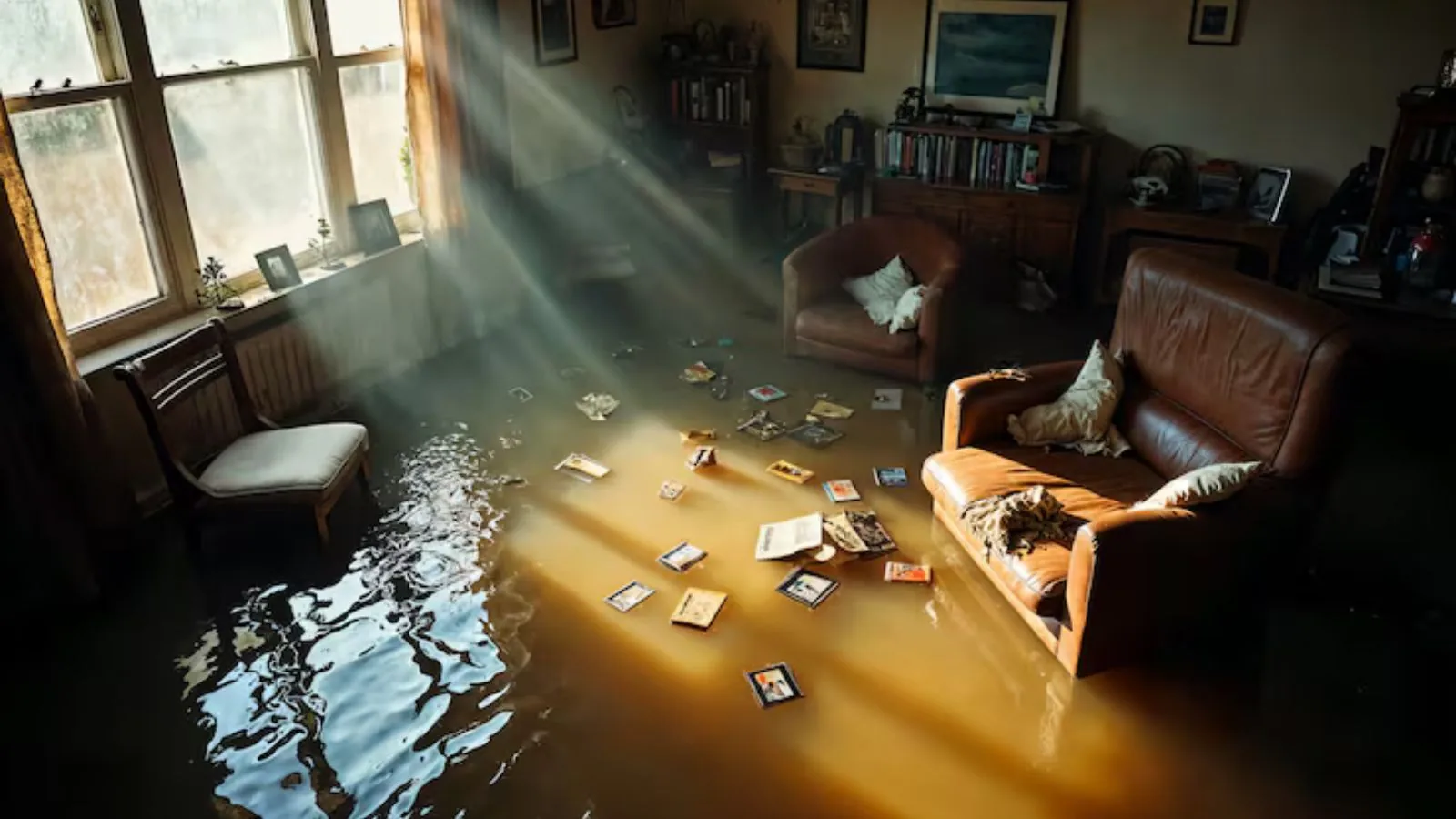
The cost of water damage restoration in Selden, NY depends on a handful of measurable things: the type of water, how much area is wet, which materials absorbed it, how many days of drying are needed, and how much has to be rebuilt.
Two houses with the same stain on the ceiling can end up with very different scopes. That is why this page gives no dollar figures, and why you should be wary of anyone who quotes one from a photo or a phone description.
What you can do is learn how a scope is built. Once you see the pieces, you can read a written scope, compare two of them fairly and ask sharper questions.
Why a number over the phone is a guess
A stain on drywall shows where water ended up, not where it traveled. Water follows framing, wicks up walls and spreads under flooring. Until a meter is on the wall, nobody knows whether the wet zone is two feet or twelve.
A phone call can still help. Describing the source, how long ago it started and which rooms are involved lets us send the right crew and equipment. Pricing is then set from what the inspection finds, and it is explained to you before work starts.
The five main cost drivers
Water category
Clean water is the simplest. Grey and black water add protective gear, containment, disinfecting steps and disposal of affected materials.
Affected area
Square footage and the number of rooms set how much extraction, equipment and labor is needed. Water that crossed a floor level adds more.
Materials involved
Hardwood, carpet with padding, drywall, plaster and insulation each dry or fail differently. Some can be saved and some cannot.
Drying days and equipment
Air movers, LGR dehumidifiers and monitoring visits are counted by the number of units and the number of days, so a slower dry-out costs more.
Rebuild scope
Removing and replacing drywall, insulation, flooring and paint is a separate body of work from drying and often the largest part.
Notice that the first four belong to mitigation, which means stopping the damage. The fifth belongs to repair, and it may be done by us or by a contractor you choose.
Talk to dispatch about your situation.
Call (934) 223-1875How a written scope gets built
A good scope starts with measurement. The crew walks the loss with a moisture meter and a thermal imaging camera, sketches the affected rooms and records readings. Those numbers decide what happens next.
- Source and category: what the water is and whether it has stopped
- Extraction: removing standing water with pumps and extraction units
- Demolition: taking out what cannot be dried, such as soaked padding or a wet ceiling section
- Drying plan: how many air movers and dehumidifiers, placed where, for about how many days
- Monitoring: daily moisture readings until materials reach their dry standard
- Cleaning and treatment: antimicrobial steps where the category calls for them
- Rebuild: itemized replacement work, if you choose to include it
Each line should state a quantity and a reason. If a line says only repairs as needed, ask what that means in rooms, materials and days.
Small changes that move the total
Time is the cheapest variable you control. Water that sits for 24 to 48 hours usually reaches more material than water removed the same day, and mold becomes a concern after that window. Starting the drying sooner tends to mean fewer boards and less drywall to remove.
Access matters too. Crews work faster in rooms where furniture is lifted and the way to the basement stairs is clear. Ask what you can safely move beforehand, since every minute spent clearing is time not spent drying.
Comparing two scopes side by side
Two companies may describe the same house very differently. Lay them next to each other and compare what is included, not only the bottom line. A lower total that leaves out monitoring or rebuild is not really lower.
| What to compare | Question to ask | Warning sign |
|---|---|---|
| Water category | How was it determined? | No category named at all |
| Drying equipment | How many units, for how many days? | Only a lump sum with no counts |
| Moisture readings | Will you record them each visit? | No monitoring or no written targets |
| Demolition | Which materials come out and why? | Everything removed before measurement |
| Rebuild | Is it itemized or separate? | Vague allowances with no quantities |
You may also ask whether the crew works to ANSI/IICRC S500, the standard for professional water damage restoration, and whether the company is licensed and insured.
Questions to settle before you approve anything
- What is included in the scope, and what is a separate rebuild estimate?
- How is the final amount affected if drying takes fewer or more days than planned?
- Who documents the readings and photos, and will I receive copies?
- What happens if a hidden problem turns up once a wall is opened?
- Do you handle the rebuild, or only the drying?
Our crews are dispatched around the clock by calling (934) 223-1875, and the scope and price are laid out before work begins. For a room with standing water, see how water extraction is scoped, and for a leaking ceiling see the ceiling water damage repair page.
Insurance and the scope
If you file a claim, your insurer will prepare its own evaluation, and it may differ from a restoration scope. A written scope with photos and moisture readings gives you something concrete to discuss. Whether any amount is paid depends on your policy, so ask your insurer what applies.
Cost factors that are specific to Selden homes
Selden grew mostly from the early 1950s through the 1970s, so many houses have older drywall, original cast iron or galvanized plumbing and finished lower levels. Older walls and finishes can add steps, since a pre-1980 house may have materials that need testing before demolition. Ask for testing to be listed in the scope if demolition is planned.
Permit rules vary for rebuild work, so ask the Town of Brookhaven Division of Building before you assume anything about what your rebuild requires. Also check whether your home is on sewer or private septic, since a backup scope looks different for each.
Scopes in nearby hamlets follow the same logic. Harbor-edge homes in Mount Sinai and lakeside homes in Middle Island often involve outside water, which moves the category and the work up a step.
Questions we hear in Selden
Why won't you give me a price over the phone?
Water spreads where you cannot see it, so an honest price needs measurements. A phone description lets us dispatch the right crew, and the price is then explained once the damage is mapped.
That avoids a number that changes halfway through the job.
Does a bigger stain always cost more?
Not always. A small stain over a long-running leak can hide a lot of wet material, while a large clean-water spill caught quickly may dry without tearing anything out.
Water category and time matter as much as size.
Is drying separate from rebuilding?
Yes. Drying and mitigation stop the damage and are scoped from moisture readings. Rebuilding replaces what was removed and is usually written as its own itemized list.
You can often choose a different contractor for the rebuild.
Why does the cost differ between sewage and clean water?
Sewage and floodwater are Category 3. They call for protective gear, containment and removal of porous materials that clean water would not require.
That extra labor and disposal is what changes the scope.
Can I ask Selden Water Damage Pros to explain a scope from another company?
You can call and describe it, and we will walk through what each line usually means. We cannot judge a house we have not seen.
A site visit with a meter is the only way to confirm quantities.
Ready to talk it through?
Call (934) 223-1875