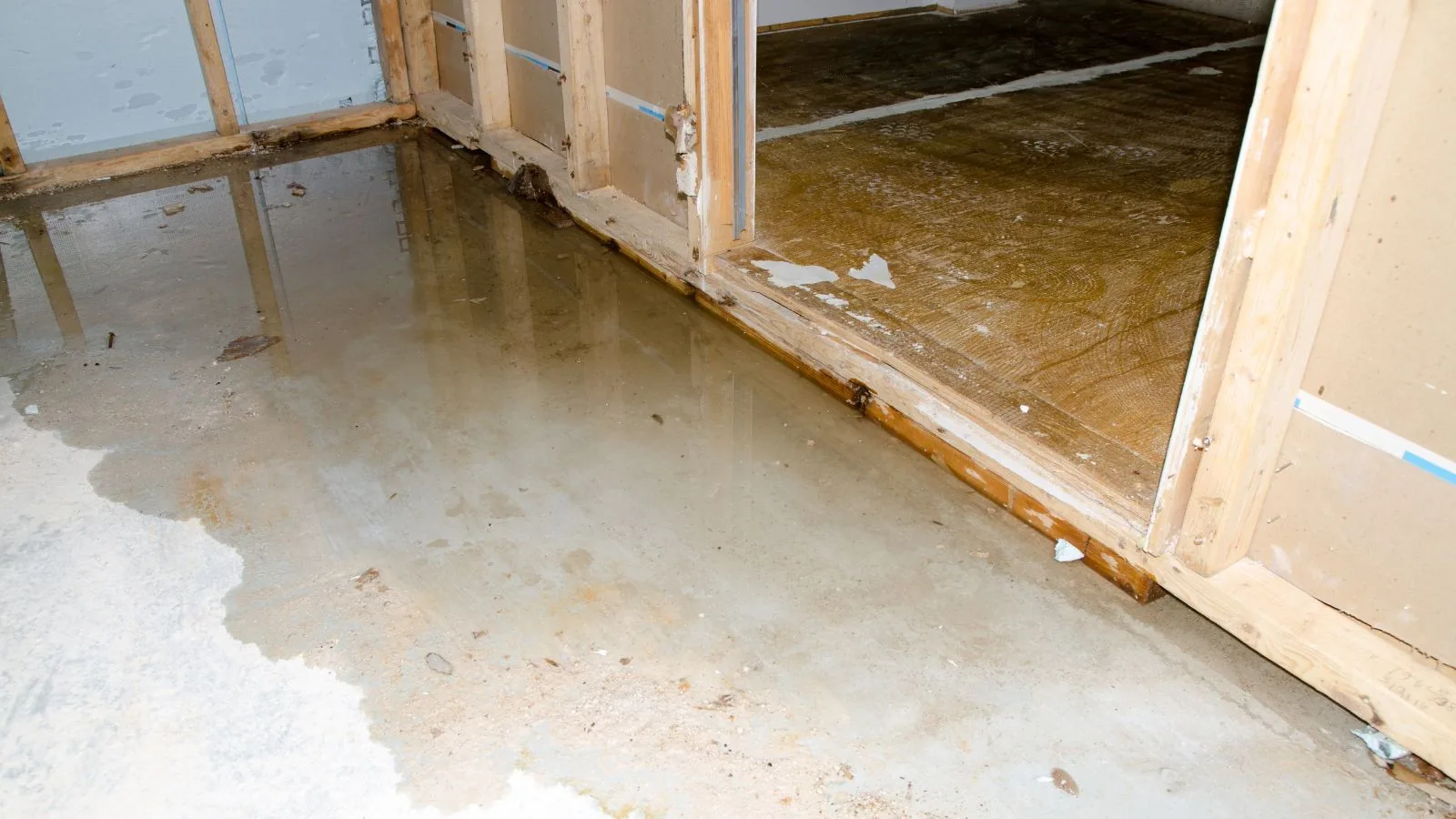
To find a hidden water leak in a Selden, NY house, shut off every fixture and appliance, read the water meter, wait, and read it again. If the meter keeps moving, water is escaping somewhere. From there you narrow the search to fixtures, then supply versus drain lines, then walls, ceilings and floors.
The checklist below is informational and needs no special tools beyond a flashlight, a phone camera and some food coloring. It also marks the points where you should stop and call a licensed plumber, and the points where a restoration crew comes in.
Clues that water is going somewhere it should not
- A water bill that jumps with no change in how many people use the house.
- A musty smell in a closet, cabinet or basement corner that does not clear with airing.
- Paint bubbles, warped baseboard, or a soft spot in a floor.
- The sound of running or hissing water when everything is off.
- A floor that feels warm underfoot in one spot, or a bathroom fan housing that drips.
- Mold-looking spots that return after cleaning.
Any one of these is a reason to test, not proof of a leak. Condensation on cold pipes can look similar, and so can a roof leak that only shows during storms.
Step 1: the water meter test
This test finds leaks on the supply side, meaning the pressurized pipes that bring water into the house. It works the same whether the leak is in a wall, under a slab or in a buried line outside.
- Turn off every tap, and stop the dishwasher, washing machine, ice maker and any irrigation.
- Find the meter, usually in a box near the street, in a pit or in a basement utility area. Lift the lid carefully, since boxes can hold insects or standing water.
- Look at the leak indicator, a small triangle or dial, and write down the register numbers.
- Wait 30 minutes to 2 hours without using any water, and read the meter again.
- If the indicator spins or the numbers advanced, water is leaking somewhere. If nothing moved, the supply side is probably intact and the problem may be a drain or an outside source.
Confirm who supplies your water by checking your water bill, since some homes are on private wells with no meter. If the leak may be between the street and the house, ask your supplier where its responsibility ends.
Talk to dispatch about your situation.
Call (934) 223-1875Step 2: fixtures and appliances
- Toilets: drop food coloring in the tank, wait 15 minutes without flushing, and look for color in the bowl.
- Sinks and vanities: feel the supply hoses, shut-off valves and the P-trap with a dry paper towel.
- Washing machine: check both hoses and the wall box behind them.
- Dishwasher: pull the kick plate and look for dampness on the floor beneath it.
- Water heater: look for rust streaks on the tank, a damp base or a leaking relief valve line.
- Ice maker line and refrigerator: slide the unit out and check the floor behind it.
- Air conditioner condensate line: look for staining below an air handler or in a closet.
A slow drip under a sink can run for months before a cabinet floor swells. Dry the area, place a sheet of paper towel beneath the trap and check again after a night. Water heater leaks have their own page at water heater leak cleanup.
Step 3: supply line or drain line?
| Clue | Points to a supply line | Points to a drain line |
|---|---|---|
| Does the meter move when everything is off? | Yes | No |
| When does water appear? | Constantly, day and night | Only after a fixture is used or flushed |
| Pressure and sound | Hissing, or low pressure at taps | Gurgling, slow drains |
| Smell | Usually none | Sewer odor, at times |
| Water type | Clean, Category 1 at first | Gray or black, Category 2 or 3 |
To test a drain, run one fixture at a time for a few minutes while someone watches the ceiling or crawl area below it. Supply leaks keep going when you stop. Drain leaks stop when the water stops.
Step 4: ceilings, walls and floors
Check ceilings under bathrooms and above kitchens first. Look for yellowish rings, sagging, peeling paint and tiny drips at light fixtures. Scan with a flashlight held flat against the surface to show ripples that normal light hides.
A moisture meter and a thermal imaging camera, which professional crews carry, find wet material behind paint without cutting into it. Warm spots on a floor can point to a hot water line in the slab, and the slab leak water damage page explains that problem. For wet insulation or drywall, see wall and drywall repair.
Do not stand under a bulging ceiling
A ceiling that sags or bulges can be holding gallons of water, and the drywall can drop without warning. Keep people out of the room, avoid light fixtures that are wet, and cut power at the panel only if the panel is dry and safe to reach. For gas smell, sparking or structural sag, call 911 or the utility first.
Plumber or restoration company?
| Situation | Call first | Why |
|---|---|---|
| Meter keeps moving, source found in a pipe or valve | Licensed plumber | The pipe or valve must be repaired or replaced |
| Water is spreading, ceiling is wet, floors are soaked | Restoration company | Water removal, drying and documentation cannot wait |
| Drain backing up with waste | Plumber or septic service, then restoration | The line is cleared, then the area is cleaned and dried |
| Leak is stopped but walls, floors or insulation stay damp | Restoration company | Moisture readings guide the drying plan |
| Water enters the basement after rain, no pipe involved | Drainage or waterproofing contractor | Restoration does not fix how water gets in |
We are a restoration company, not a plumbing or waterproofing company. Once the source is stopped, our licensed and insured crews are dispatched around the clock to dry and document the loss. We explain the scope and price before work starts. See water extraction when water is standing on a floor.
Water supply and empty houses around Selden
The Suffolk County Water Authority supplies public water across Suffolk County, and its customer service line is (631) 698-9500. Its main break map at scwa.com/main-breaks helps rule out a street-side problem, and your bill confirms whether SCWA is your supplier.
Selden's 2020 housing count was 7,167 units, with 4.6% vacant. A vacant or seasonal house has no one to hear a hiss or see a stain, so arrange for a neighbor or relative to look inside regularly and consider shutting the main valve if the house will stand empty.
In nearby Middle Island, 30.1% of households are one person. A person living alone can miss a slow leak behind a washer or under a vanity, so a neighbor check helps there too. Houses near Mount Sinai Harbor, in Mount Sinai, should check the FEMA flood map to separate outside water from plumbing leaks.
Questions we hear in Selden
How long should I wait on the water meter test?
Thirty minutes shows a fast leak, and 2 hours or overnight helps with slow ones. Use no water at all during the wait, including flushing.
Can a hidden leak run without raising my water bill?
A drain leak can, because the water was already used and counted. Supply leaks usually show up in the meter and eventually the bill.
Staining, smells and warped materials are the better signs for drain leaks.
What does a thermal imaging camera show?
It shows surface temperature differences, so a wet area behind paint can appear cooler. It is a clue, and moisture readings or opening a small section confirm it.
Professionals use it alongside a moisture meter.
Does homeowners insurance cover a hidden leak?
Sudden and accidental damage is often covered, while long-running leaks often are not. Check your policy and ask your insurer.
Photos, readings and dated notes help show when you noticed the problem.
My Selden house is on septic. Does that change how I look for a drain leak?
A septic or cesspool system adds another place for waste water to go wrong, such as damp ground over a tank. Ask whether your home is on a sewer or a private septic system.
If you see slow drains with soggy yard areas, call a septic service or plumber.
Ready to talk it through?
Call (934) 223-1875