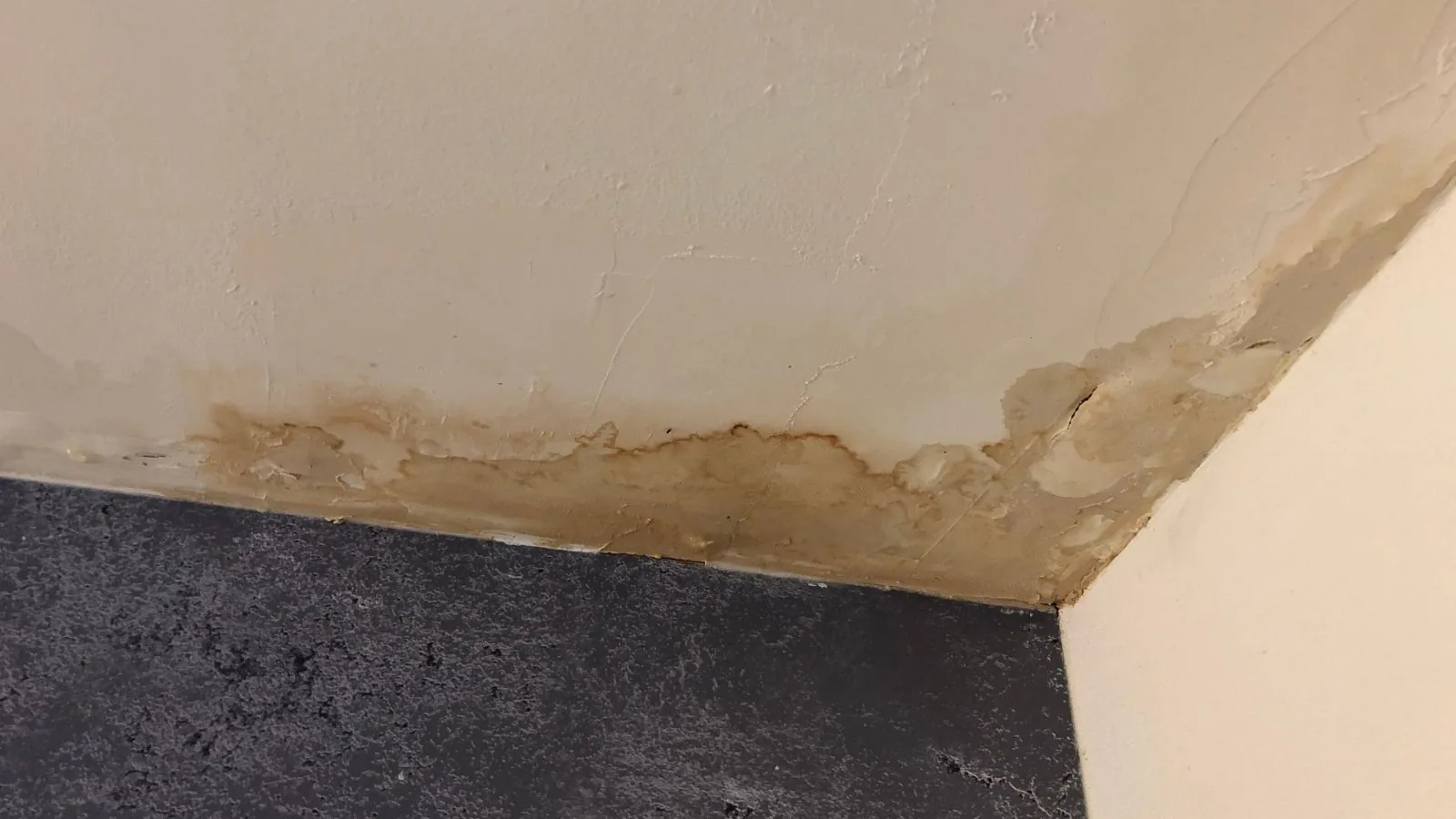
Mold from water damage starts when wet building materials stay damp past the first day or two. Spores are already in every house, so the missing ingredient is nearly always moisture that lingers. EPA guidance is to dry wet materials within 24 to 48 hours, and a house that meets that window often never becomes a mold job at all.
This post lays out the sequence from the first spill to visible growth in Selden, NY homes. It also shows where a drying job ends and a mold job begins, and who handles each. It is general information, not a diagnosis of your house.
The order of events after a leak
Water damage rarely goes straight from a leak to a mold colony. There are stages, and each one gives you a chance to interrupt the next. Here is the usual order when a supply line, appliance hose or roof leak soaks a room.
- Water soaks porous materials such as drywall paper, carpet pad, insulation and the bottom of wall framing.
- Standing water is removed, but moisture stays locked inside those materials.
- That trapped moisture evaporates and raises humidity, which dampens nearby surfaces the leak never touched.
- Past the 24 to 48 hour drying window, damp organic surfaces can begin to support growth.
- Staining, a musty smell or fuzzy patches appear, often at corners, baseboards, closet walls and ceiling edges.
- Growth continues for as long as the material stays wet and has something to feed on.
Notice that stages two and three are invisible. A floor can look and feel dry while the wall cavity beside it is still holding water. That is why a moisture meter reading matters more than how a surface looks.
Which materials turn a leak into a mold problem
Drywall
The paper facing is food, and the gypsum core holds water like a sponge. A small supply-line leak can soak a wall from the baseboard up several inches.
Carpet and pad
The foam pad stays wet long after the carpet surface feels dry, and a wet pad against a concrete slab or subfloor dries very slowly.
Framing and subfloor
Wood framing absorbs water slowly and releases it slowly. A stud bottom plate can stay damp for days behind finished walls.
Insulation
Fiberglass batts trap moisture against the back of the drywall. Wet batts usually have to come out rather than dry in place.
Talk to dispatch about your situation.
Call (934) 223-1875Drying job or mold job? A quick way to sort it
The two jobs use different crews, different equipment and, in New York, different licences. This table shows how the common situations usually sort out.
| What you see | Usually this job | Why |
|---|---|---|
| Leak stopped yesterday, no smell, no staining | Drying | The 24 to 48 hour window is still open and growth has probably not started. |
| Leak stopped a week ago, wet carpet or drywall still in place | Drying first, with a mold check | The window has passed, so moisture readings and a look behind finishes decide the next step. |
| Fuzzy or dark patches on a wall, ceiling or closet corner | Mold | Visible growth means the moisture sat long enough to matter. |
| Musty odor but nothing visible | Moisture investigation | A thermal imaging camera and meter can find the wet cavity before anything is opened. |
What a drying crew does to stop the sequence
The goal of structural drying and dehumidification is to bring wet materials back to their normal moisture content before growth gets a foothold. A crew maps the wet area with moisture meters and a thermal imaging camera, then sets air movers to push air across surfaces and LGR dehumidifiers to pull water out of the air.
Readings are logged each visit and compared against a dry reference from an unaffected wall. Equipment stays until the wet materials match that reference. This is the stage where most mold is prevented, which makes speed after the leak worth more than anything done later.
Drying does not repair the source. A dripping valve, a failed hose or a roof leak has to be fixed by the right trade, and we are not plumbers or roofers. Without that repair, the area simply gets wet again.
When the job becomes mold remediation
Once growth is visible, or readings show materials stayed wet well past the drying window, the work is mold remediation. The crew contains the area with plastic barriers, runs HEPA air scrubbers, removes materials that cannot be cleaned, and cleans what can be. Work to the ANSI/IICRC S520 standard is what homeowners can ask any company about.
New York has its own rule for this. The State Mold Program under Labor Law Article 32 requires licences for mold assessors and mold remediators, and the same individual cannot do both on one property. An independent assessor writes the scope, the remediator carries it out, and a post-remediation assessment confirms the work met the standard. Ask to see each licence.
Fix the water before anything else
Cleaning mold while the leak is still active only buys a few weeks. Moisture is the cause, so the source repair comes first, then drying, then removal. Any health question about living with mold belongs with your physician.
What to do today if a leak just happened
- Stop the water at the fixture valve or the main shut-off.
- Cut power to the wet area only if the panel is dry and safe to reach. If water is near outlets, a ceiling is sagging or you smell gas, stay out and call 911 or the utility.
- Take photos and video of every wet surface before moving anything.
- Lift wet rugs, books and cardboard off floors and away from walls.
- Open interior doors so air can move, and run a fan if power is safe.
- Call for a drying assessment the same day if you can, while the 24 to 48 hour window is still open.
Coverage questions come up after most leaks. Sudden and accidental damage is often covered while gradual leaks and neglect often are not, so ask your insurer before you assume. A written scope and dated photos of the damage help support your own claim.
Selden houses and hidden moisture
Suburban development in Selden took off in the early 1950s, so houses from that era may carry older drywall, original paint layers and finished basements. Older finishes can hide a wet wall cavity well, which makes meter readings more useful than a visual check. A pre-1980 house may also have materials that need testing before anything is demolished, so ask before opening walls.
Many Suffolk County homes use a septic system or cesspool instead of sewer. If the water that wet your floor came from a drain backup, it is not clean water, and the job is different. Ask whether your home is on a sewer or a private septic system, and treat any backup as contaminated.
We also dispatch crews to Mount Sinai, where homes near the harbor should look up their address on the FEMA flood map, and to Middle Island, where properties near the lakes and river headwaters may sit in low spots. Standard homeowners policies usually exclude flood, so storm water entering from outside is a separate insurance conversation. Permit rules vary, so ask the Town of Brookhaven Division of Building before any rebuild.
Questions we hear in Selden
Can mold grow behind drywall after I fixed the leak?
Yes, if the wall cavity stayed damp. A fixed leak only stops new water, and wet gypsum and framing can hold moisture for days. A moisture meter and thermal imaging camera can check the cavity without cutting into the wall.
Does every water leak end in mold?
No. Growth depends on how long the materials stay wet, what they are made of and how much the room is ventilated. Prompt drying within 24 to 48 hours is the main way to keep a leak from becoming a mold job.
Do I need mold testing before cleanup?
In New York, an independent licensed assessor typically defines the scope before a licensed remediator starts. Because the same individual cannot do both jobs on one property, ask each company to show its licence.
My Selden house was built in the 1950s or 1960s. Does that change what I do?
It changes how carefully walls should be opened. Older houses may have original materials that need testing before demolition. Ask the Town of Brookhaven Division of Building about permits before any rebuild.
Ready to talk it through?
Call (934) 223-1875