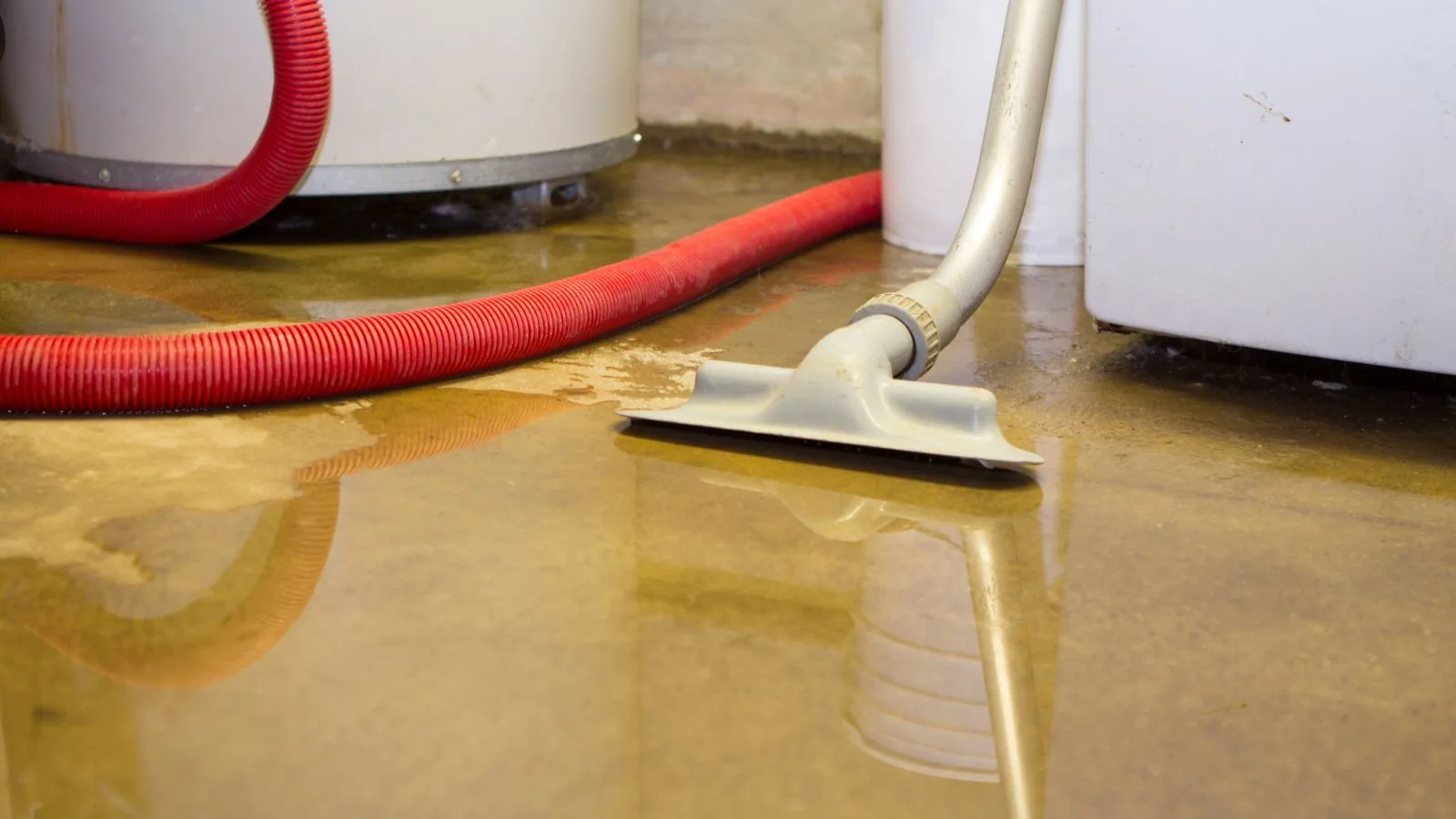
Water damage categories 1, 2 and 3 grade how contaminated the water is, from clean (Category 1) to gray (Category 2) to black (Category 3). They come from ANSI/IICRC S500, the standard for professional water damage restoration, and they decide what gets dried in place and what gets thrown out. If you are standing in a wet room in Selden, NY, the category sets how careful you need to be.
A second label, the class, grades how much water the building took in and how fast it will evaporate. The two ideas get mixed up often, so this post separates them and shows how water slides up the scale as time passes.
Three categories in plain words
Category 1: clean
Water from a sanitary source, like a broken supply line, a faucet left running or a rainwater drip through a roof. It does not carry significant contamination when it first escapes.
Category 2: gray
Water with some contamination that could cause discomfort if people were exposed or swallowed it. Examples are washing machine and dishwasher discharge or a toilet overflow with urine but no feces.
Category 3: black
Grossly contaminated water that may contain sewage, soil, chemicals or organisms. Sewer backups, river flooding and standing water that has sat for a long time all land here.
The color names are shorthand and the water does not always look the part. Clean-looking water can be Category 3 if it came from a flooded yard, and cloudy water can be Category 1 if it just stirred up dust. The source is what counts, not the shade.
Source, category and what happens to the materials
| Source of water | Category | What usually happens to materials |
|---|---|---|
| Broken supply line, failed water heater tank, ice maker line | 1 | Drywall, framing, hard floors and carpet are often dried in place. Padding may be removed. |
| Washing machine or dishwasher discharge, sump pump overflow | 2 | Carpet and pad are usually removed. Drywall and wood are cleaned and dried, or cut out if soaked. |
| Toilet overflow with waste, sewer line backup | 3 | Porous items such as carpet, pad and soaked drywall are removed. Hard surfaces are cleaned and disinfected. |
| River, groundwater or storm surge entering the home | 3 | Soaked porous materials are removed, framing is cleaned and dried, and contents are sorted. |
| Category 1 water left sitting for days | Moves to 2 or 3 | Plan moves from drying to cleaning and removal as contamination builds. |
The last row shows the real-world twist. The category is judged at the moment the crew arrives, not only at the moment the water escaped. Cutting out a wet section of drywall or lifting a carpet is part of that judgment, so the written scope should name the category and why.
Talk to dispatch about your situation.
Call (934) 223-1875How clean water works its way up the scale
S500 recognizes that water changes while it sits. Warm rooms, organic material in carpet and drywall paper, and contact with dirt or dust all feed bacteria. A supply-line leak that starts as Category 1 can reach Category 2 within a day or two when it soaks a carpet pad in a closed room.
Category 2 can slide toward Category 3 the same way, especially when it sits in a basement for several days. That is why quick water removal is more than a convenience. Pumping standing water early, through water extraction, keeps the job at a lower category and a smaller scope.
You cannot judge the category with your eyes or nose. A technician looks at the source, the time elapsed, the temperature and what the water crossed. When the answer is uncertain, the safer assumption is the higher category.
Classes 1 to 4: how much water, how fast it dries
The class has nothing to do with contamination. It describes how much water is in the building and how much of it must evaporate.
- Class 1: a small area with little absorbed water, such as a wet section of vinyl or concrete slab.
- Class 2: a whole room of carpet and pad, with moisture wicking up the walls, generally less than 24 inches.
- Class 3: water that came from above, so ceilings, walls, insulation and carpet are all saturated.
- Class 4: specialty drying for materials that hold water deeply, such as hardwood, plaster, brick and concrete.
A burst pipe in an upstairs ceiling often means Class 3, while a washing machine hose that wet one bathroom floor may be Class 2. Class drives how many air movers and LGR dehumidifiers go in, and category drives what gets removed. Both end up in the written scope.
Why the category matters to your claim and your safety
Insurers generally want the source and condition of the water on record. Sudden and accidental damage is often covered, gradual leaks and neglect often are not, and flood usually needs separate flood coverage. Ask your insurer how it treats a sewer backup, since that can be an endorsement rather than part of a standard policy.
We document the loss with photos, moisture readings and a written scope that names category and class, so your claim file has facts to work from. Whether a claim is paid remains your insurer's decision.
Stay out of Category 2 and 3 water
Keep people and pets out of any room with sewage, flood water or a washing machine overflow that has sat for a day. Do not run a household vacuum on it. If wet outlets or appliances are involved, turn power off only if the panel is dry and safe to reach, and call 911 or the utility for gas or electrical danger.
Selden water sources and what they mean for the category
Septic systems and cesspools serve many homes in Suffolk County, so check whether yours is on a sewer or a private system. Either way, a backed-up drain is Category 3 and calls for a plumber or septic service for the line plus a crew for sewage backup cleanup.
In August 2014 more than 13 inches of rain fell at Islip in about a day, and Long Island took a direct hit from Superstorm Sandy in October 2012. Water that enters from outside after storms like those is treated as Category 3, so flood damage cleanup starts with removal rather than drying. Look up your address on the FEMA flood map and check whether your policy includes flood.
The same logic applies in harbor-side Mount Sinai, where tidal and storm water is outside water, and in Middle Island, where low spots near Artist Lake, Pine Lake and Spring Lake can collect runoff.
Questions we hear in Selden
Who decides which category my water damage is?
A trained technician makes the call on site, based on the source, the time elapsed and what the water touched. It can change if conditions change.
You can ask to see the category and class noted in the written scope.
Can Category 1 water be cleaned up by me?
Small, fresh clean-water spills often can be, using towels, a wet-dry vacuum, fans and a dehumidifier. If it spread under flooring or into walls, measure before assuming it is dry.
Anything beyond Category 1 should be handled by a crew.
Is rainwater leaking through the roof Category 1?
It starts out that way, but roof water picks up dust, insulation and debris on its way through the structure. Crews often treat it with caution once it has soaked building materials.
The roof itself needs a roofer, and the interior drying and repair is where restoration comes in.
Does the class change the price?
Category and class both affect scope. A higher class means more equipment and longer drying, and a higher category means more removal and cleaning.
We explain the scope and price before work starts, so the reasoning is on the table.
A Selden toilet overflowed onto the bathroom floor. What category is it?
It depends on what was in the bowl. A clear overflow from a tank is closer to Category 1, while an overflow carrying waste is Category 3.
When you cannot tell, treat it as the higher category and keep people out until it is cleaned.
Ready to talk it through?
Call (934) 223-1875